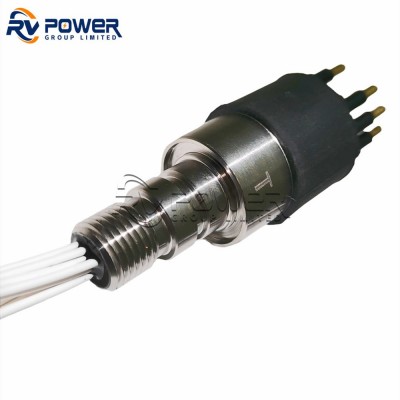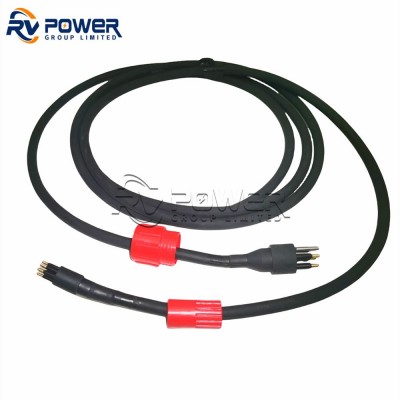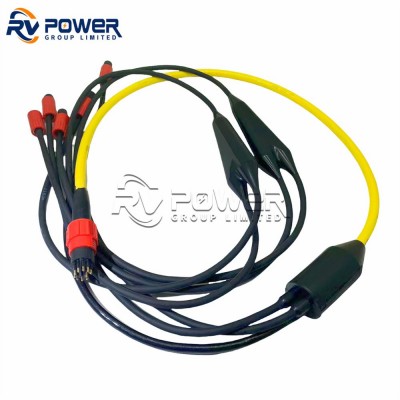
Micro circular underwater connectors are the dominant interface standard for subsea sensors, ROV instrumentation, underwater cameras, acoustic modems, and small-bore umbilical terminations. Their compact geometry, reliable double O-ring sealing, and wide contact-count range make them the preferred choice wherever a low-profile, depth-rated wet-mate connection is required.
This guide covers everything a design engineer or procurement specialist needs to know: connector anatomy, material selection, depth rating principles, contact configurations, installation best practice, and how to specify the right connector for your application.
The connector body is the primary structural element, housing the insulator, contacts, and sealing faces. Standard material is 316L stainless steel for its combination of strength, corrosion resistance in seawater, and machinability. Titanium bodies are available for weight-critical applications (AUVs, gliders) where the density advantage justifies the cost premium. Delrin (acetal) bodies are used where electrical isolation between the connector shell and the vehicle chassis is required.
The insulator locates and electrically isolates the contacts within the body. Polyurethane cast insulators are standard for most catalog configurations. PEEK insulators are specified for high-temperature environments (geothermal, hot vent instrumentation) and where chemical resistance to hydrocarbons is required.
Contacts are machined from copper alloy (typically beryllium copper for spring contacts, brass for solid pins) with gold plating over nickel underplate. Gold thickness is typically 0.5 µm minimum on mating surfaces — sufficient for the contact resistance requirements of signal-level circuits. Power contacts use heavier plating and larger cross-sections.
The mating face incorporates a double O-ring seal arrangement. The primary O-ring provides the pressure-rated interface seal; the secondary O-ring serves as a backup and excludes particulate contamination from the primary sealing groove. O-ring material is EPDM as standard, with Viton (FKM) available for hydrocarbon-contaminated environments.
Standard micro circular connectors use a threaded coupling ring for positive locking. The thread pitch is selected to provide both secure engagement under vibration and sufficient mechanical advantage for hand-tightening at depth using ROV manipulators. Anti-rotation features on the plug body prevent contact rotation during mating.
Depth rating is expressed in meters of seawater (msw) and corresponds to a hydrostatic pressure equivalent. Standard seawater density is used (1,025 kg/m³), giving approximately 1 bar per 10 metres.
| Depth Rating | Pressure Rating | Typical Application |
|---|---|---|
| 300 m | 30 bar | ROV inspection class, coastal monitoring |
| 600 m | 60 bar | Continental shelf operations |
| 1,000 m | 100 bar | Deep shelf, oil & gas inspection |
| 2,000 m | 200 bar | Deep water intervention |
| 4,000 m | 400 bar | Full ocean depth instrumentation |
| 6,000 m | 600 bar | Hadal zone research |
Our standard micro circular catalog connectors are rated to 4,000 m (400 bar). Connectors for deeper applications are available on request with enhanced sealing and pressure-compensated insulator designs.
Selecting the correct contact count requires balancing signal/power channel requirements against connector envelope and cost:
| Contact Count | Common Applications |
|---|---|
| 2 | Simple sensor power/return, single coax equivalent |
| 3 | RS-232 (Tx, Rx, GND), 3-phase motor (small) |
| 4 | RS-485 with power, full-duplex serial + power |
| 5–6 | Multi-channel sensor, compass/IMU interface |
| 7–8 | Camera with PTZ control, DVL interface |
| 10–12 | Multi-function instrument module, LED lighting array |
| 14–16 | Complex sensor suite, multi-output controller |
All micro circular connectors in our catalog are wet-mateable — they can be connected and disconnected while submerged, without draining or pressurizing an oil-filled housing. This is achieved through the face-seal design: O-ring compression at the mating face excludes water from the contact area before the contacts engage.
Dry-mate variants (without face seals, intended for topside connection before deployment) are also available where cost reduction is the priority and the connector will never be mated in-water.
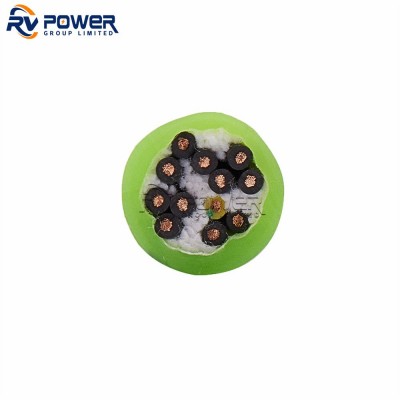
We supply complete cable assemblies with connectors factory-terminated, pressure-tested, and shipped ready to install. This is the preferred option for standard cable types (polyurethane jacket, 4–12 conductors). Cable lengths from 0.5 m to 300 m available from stock or on short lead time.
For systems where cable lengths are determined on-site, we supply field-terminable versions with solder or crimp termination. Detailed installation instructions and tooling recommendations are provided with every order.
For the highest reliability — particularly on connectors that will see repeated cycling in dynamic subsea environments — potted terminations using bi-component polyurethane encapsulant provide strain relief, moisture exclusion at the cable entry, and mechanical protection for the conductor terminations.
After every deployment, rinse connectors with fresh water to remove salt deposits. Inspect O-rings annually or after any hard impact. Replace O-rings at the first sign of flattening, cracking, or surface damage. Contact faces should be inspected under magnification annually in high-cycle applications.