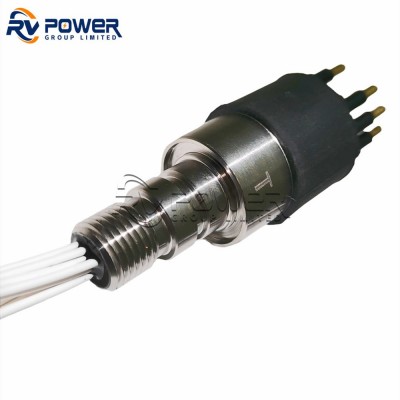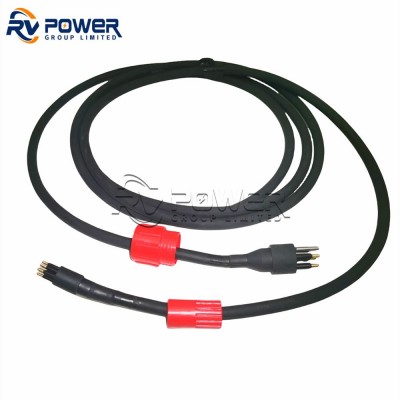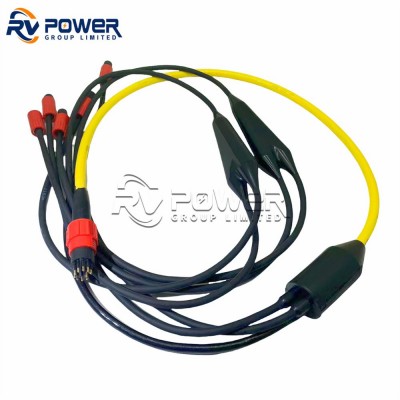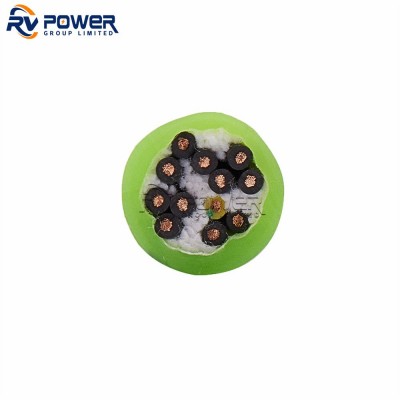
In offshore and subsea operations, project schedules are measured in vessel-days. A single delayed component can cost tens of thousands of dollars in standby time. Wet-mate underwater connectors — despite being small components — are often the longest-lead item in an ROV system build or a subsea instrument deployment. Lead times of 10 to 16 weeks from traditional European suppliers are common, and stock-outs are frequent.
RV Power Group manufactures a comprehensive range of subsea wet-mate connectors with a standard lead time of 7 to 15 working days for catalog items, and 3 to 5 weeks for custom configurations. This document explains how we achieve this, and why it matters for your project.
Offshore support vessels charter at USD 15,000 to USD 80,000 per day depending on class. A two-week connector delay that pushes a subsea intervention campaign means the project absorbs USD 210,000 to USD 1,120,000 in additional vessel costs — for a connector that may cost a few hundred dollars. The connector is not the cost; the wait is.
ROV operators working on contract frequently carry spare connector inventory for this reason. However, stock is finite. When a vehicle sustains a connector failure mid-campaign in a remote location, the fastest available replacement source determines whether the ROV returns to the water in hours or weeks.
Oceanographic and environmental monitoring campaigns are tied to weather windows, seasonal biology, or permit timelines. Missing a deployment window can defer a research program by 12 months. Connector lead time is not an abstract procurement metric — it is a scientific program constraint.
Most connector resellers source bodies from third-party machine shops and assemble in-house. We operate our own CNC machining center producing 316L stainless steel and titanium connector bodies from bar stock. This eliminates the largest single lead-time variable — external machining queue — and gives us direct control over dimensional tolerances and surface finish.
Elastomeric face seals and over-molded cable terminations are produced in our own tooling room using compression and injection molding. EPDM and polyurethane compounds are batch-certified. We do not depend on external molding suppliers for standard connector configurations.
We maintain buffer stock of:
This buffer means that an order for 10 to 50 units of a standard catalog connector can move directly to machining final dimensions and assembly — bypassing material procurement entirely.
For urgent orders, our production planning team schedules assembly and quality testing in parallel with final machining. Electrical continuity testing, insulation resistance measurement, and pressure testing are performed in a dedicated QC cell running concurrent shifts during peak demand.
Our catalog connectors are designed to the same pin-circle geometry, contact spacing, and mating face dimensions as the industry-standard configurations that have been in widespread use for over 20 years. This means our connectors mate with existing bulkheads, penetrators, and cable assemblies already installed on your vehicle or instrument — no wiring modification required.
Coupling threads on our circular and micro circular series connectors follow the same pitch and diameter as established industry standards. Field technicians can install our connectors into existing locking sleeves and bulkhead penetrators without machining adapters.
Contact current and voltage ratings match or exceed the values specified in the original equipment documentation. We publish detailed electrical ratings — maximum current per contact, insulation resistance, dielectric withstand voltage — for every catalog item.
| Product Category | Standard Lead Time | Express Option |
|---|---|---|
| Micro Circular (2–8 contact) | 7–10 working days | 5 working days |
| Micro Circular (10–16 contact) | 10–15 working days | 7 working days |
| Circular Series (3–12 contact) | 7–12 working days | 5 working days |
| Circular Series (14–24 contact) | 12–18 working days | 10 working days |
| Coax Series | 7–10 working days | 5 working days |
| Hybrid Opto-Electrical | 15–25 working days | 12 working days |
| Custom configurations | 4–8 weeks from approved drawings | — |