MIL-DTL-24643 is the United States Department of Defense detail specification covering low-smoke, halogen-free electrical cables for installation aboard naval surface ships and submarines. Originally established as MIL-C-24643, it was revised to MIL-DTL-24643 (Detail Specification) to align with DoD standardisation reform. Understanding this specification is essential for engineers specifying cables for naval platforms, coast guard vessels, government research ships, and commercial vessels built to naval classification standards.
MIL-DTL-24643 applies to all power, lighting, control, and signal cables installed in:
The specification is also referenced — though not mandatorily required — for research vessels, oceanographic ships, and offshore platforms where the fire performance and smoke characteristics of naval cable are desirable.
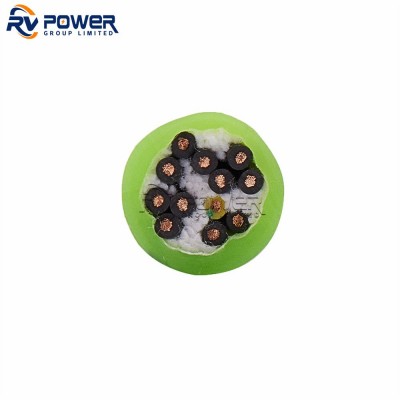
MIL-DTL-24643 mandates tinned copper conductors. The tinning prevents sulphide corrosion of the copper surface and improves solderability for field terminations. Conductor classes follow IEC 60228 Classes 1 (solid) and 2 (stranded); stranded is standard for most shipboard applications due to vibration resistance.
The specification requires cross-linked polyethylene (XLPE) or cross-linked ethylene propylene rubber (XLPE/EPR) insulation. Both materials provide excellent dielectric properties and resist the wet, salt-laden atmosphere of a shipboard environment. The insulation must pass dielectric voltage withstand tests at 2 × rated voltage + 1,000 V for one minute.
Signal cables under MIL-DTL-24643 use either an overall braid shield (90% minimum optical coverage) or an individual pair foil shield with drain wire. The shielding is critical for electromagnetic compatibility (EMC) on crowded naval platforms where high-power radar, communications, and weapons systems generate intense electromagnetic fields.
The outer jacket must be a halogen-free, low-smoke compound — typically LSOH (Low Smoke Zero Halogen) or LS0H thermoplastic elastomer. The rationale: in a shipboard fire, halogen-containing jackets (PVC) produce hydrogen chloride gas, which is toxic and corrosive to electronics. The LSOH jacket produces minimal smoke and no halogenated gases, giving crew members more time to fight the fire and evacuate.
Jacket colour coding is defined per the specification type designation (see Section 4 below).
Armoured variants include an interlocked metal tape armour (IMTA) of galvanised steel or aluminium between the inner and outer jacket. Armour is required for cables in areas exposed to mechanical damage — machinery spaces, cable transits through bulkheads, and any location where rodent activity or mechanical impact is possible.
MIL-DTL-24643 cables must pass the following fire tests:
Each cable type under MIL-DTL-24643 has a slash-number designation (e.g., MIL-DTL-24643/1, /2, /3...) that defines specific construction details. Key designations include:
| Designation | Description | Typical Use |
|---|---|---|
| MIL-DTL-24643/1 | Single conductor, 600 V, unarmoured | Power distribution, lighting |
| MIL-DTL-24643/5 | Multi-conductor, 600 V, overall shield | Control and instrumentation |
| MIL-DTL-24643/10 | Twisted pairs, individually shielded | Signal and data circuits |
| MIL-DTL-24643/15 | Coaxial, 50 Ω or 75 Ω | RF and video signal |
| MIL-DTL-24643/25 | Armoured multi-conductor, 600 V | Machinery spaces, high-risk areas |
| MIL-DTL-24643/39 | Submarine cable, 1,000 V, pressure-resistant | Submarine internal wiring |
Manufacturers wishing to supply MIL-DTL-24643 cable must hold Qualified Products List (QPL) status, granted by the US Defense Logistics Agency (DLA) after testing of samples at a DLA-approved laboratory. Buyers should verify that their supplier's cable is on the current QPL-24643 list, updated quarterly by DLA.
For commercial buyers who require the fire performance of MIL-DTL-24643 but do not need formal QPL compliance (e.g., research vessels, commercial naval auxiliary craft), cables built to the same construction standard but without QPL certification are available at lower cost and shorter lead times.
When specifying MIL-DTL-24643 cable, buyers should provide the following information to the manufacturer:
RV Power Group supplies cables built to MIL-DTL-24643 construction standards, including LSOH-jacketed, tinned-copper, XLPE-insulated designs suitable for naval and defence marine applications. Contact our technical sales team with your specification and we will confirm compliance and provide a detailed data sheet.