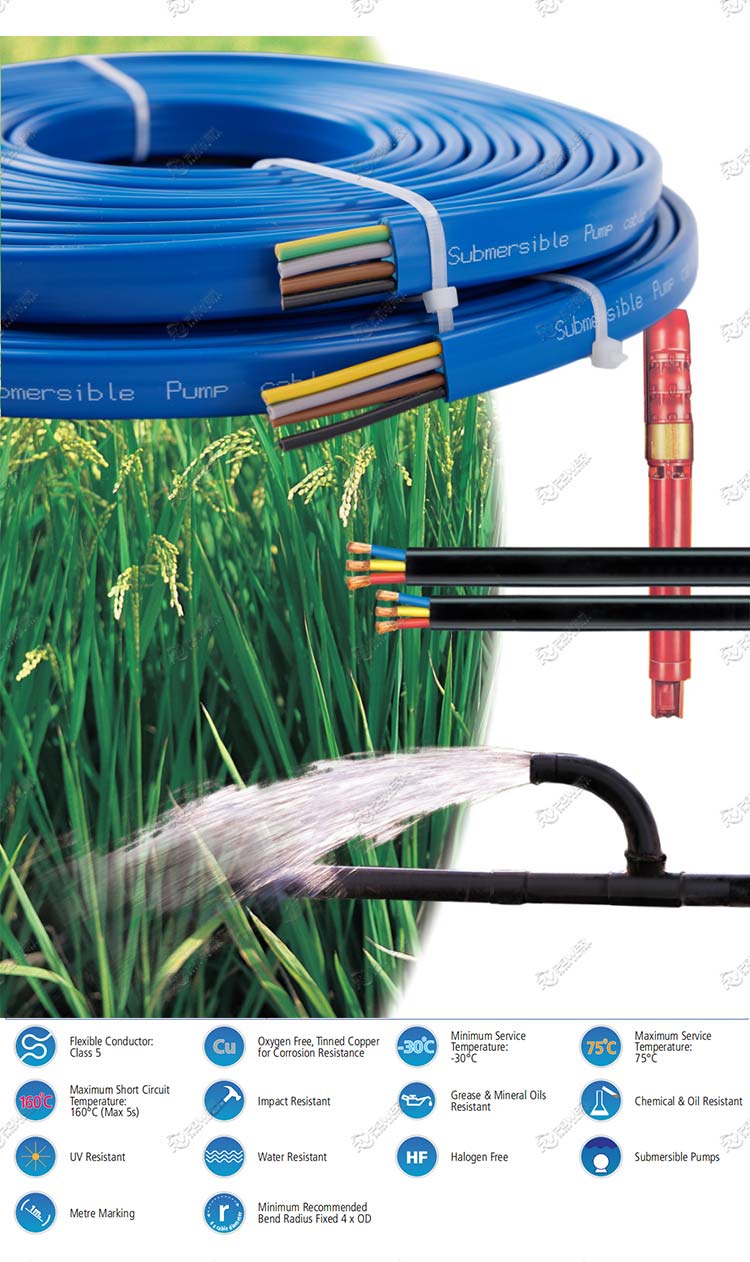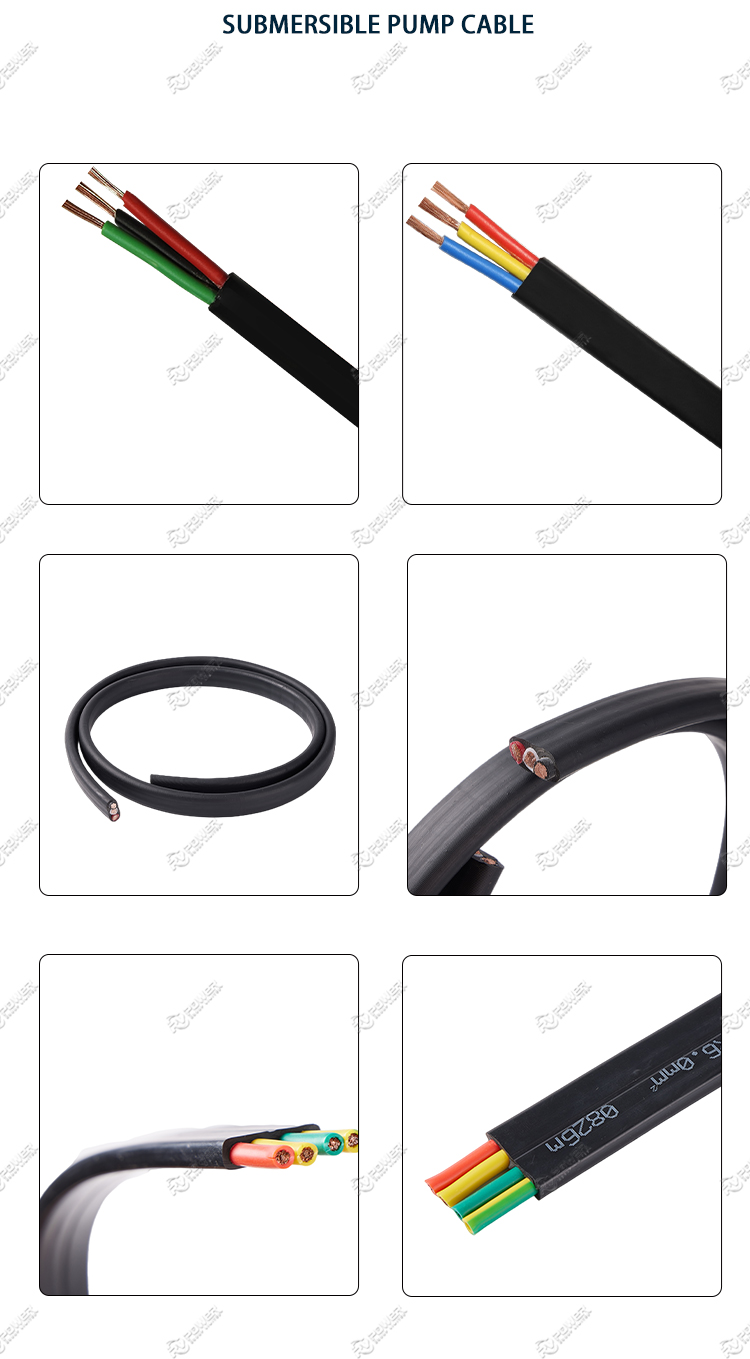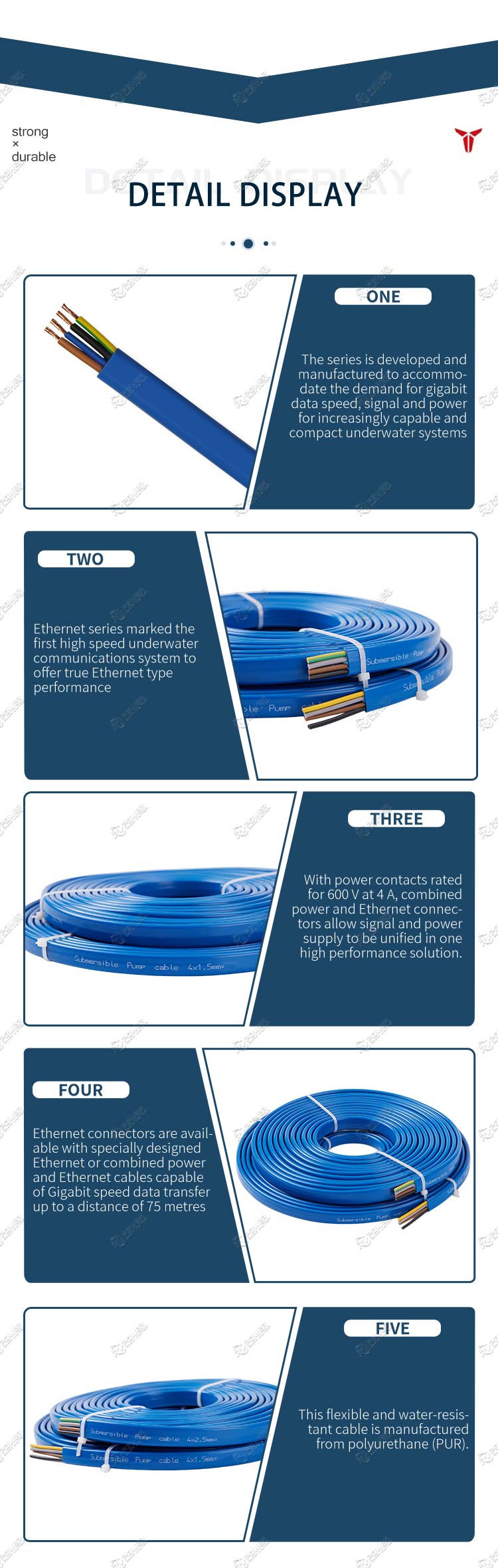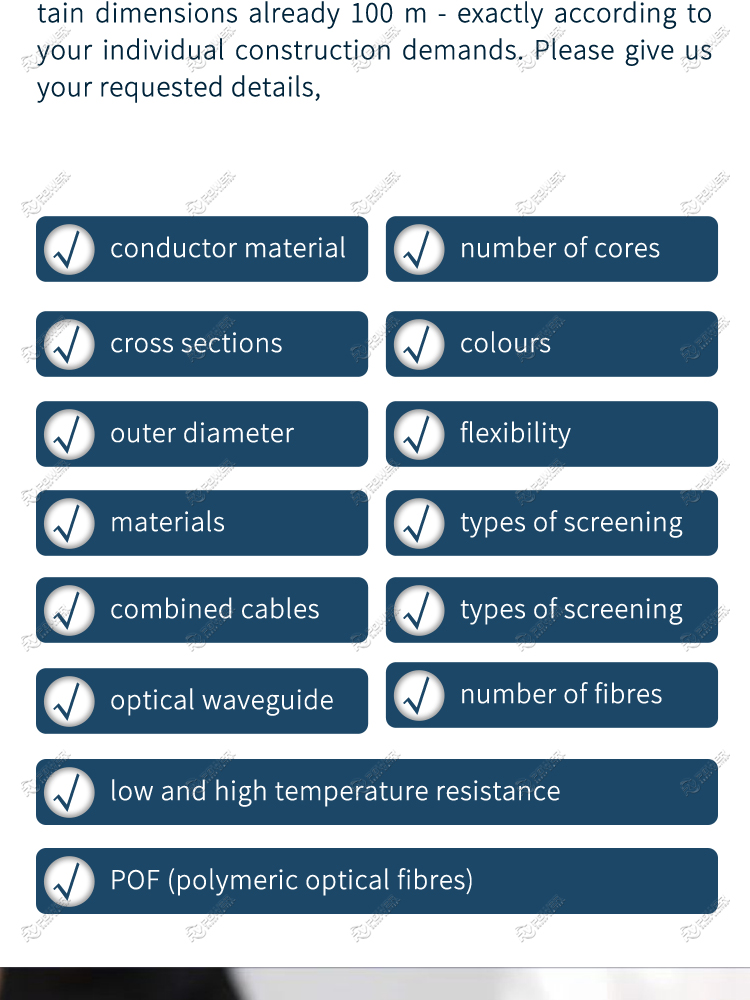

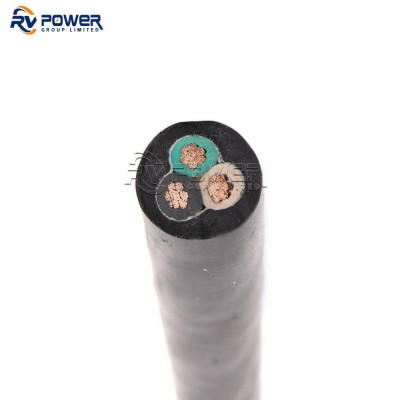
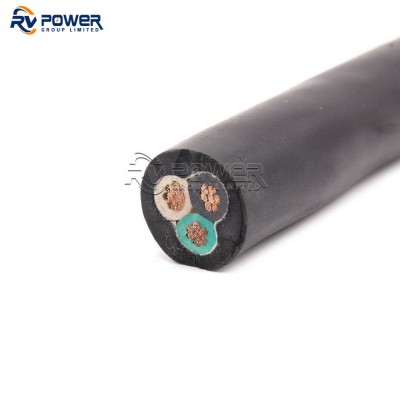
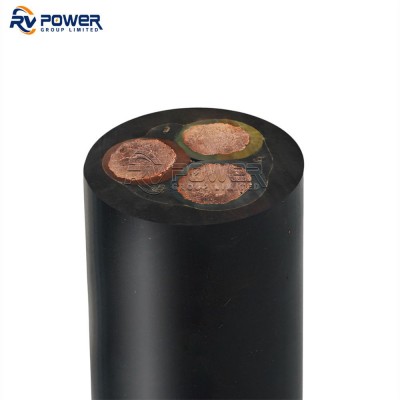
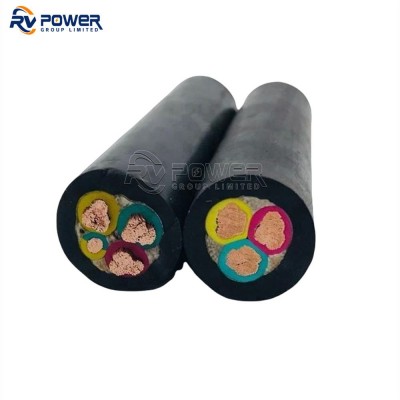
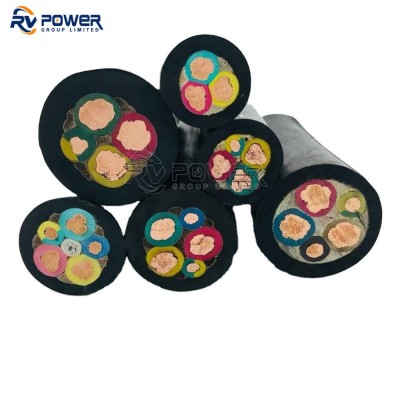
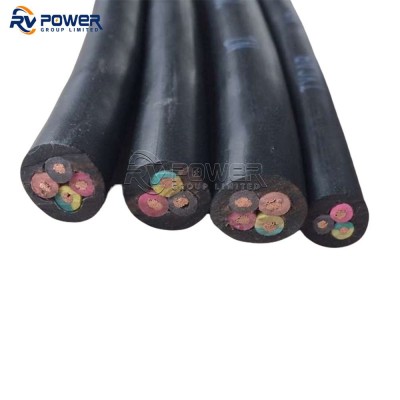
3-core rubber EPDM submersible pump cable. Waterproof, flexible, rated 0.6/1kV. Superior low-temperature flexibility and chemical resistance vs PVC. For deep well, irrigation, and wastewater pumping.
Submersible pump cables are permanently submerged in water — a duty condition that eliminates standard PVC and rubber cables, which are not designed for continuous water immersion. The waterproof construction of submersible pump cables uses a water-blocking filler compound and tightly extruded insulation and sheath layers to prevent water ingress through the cable body, and tinned copper conductors to resist the corrosion that occurs when moisture reaches bare copper through micro-cracks and abrasion damage.
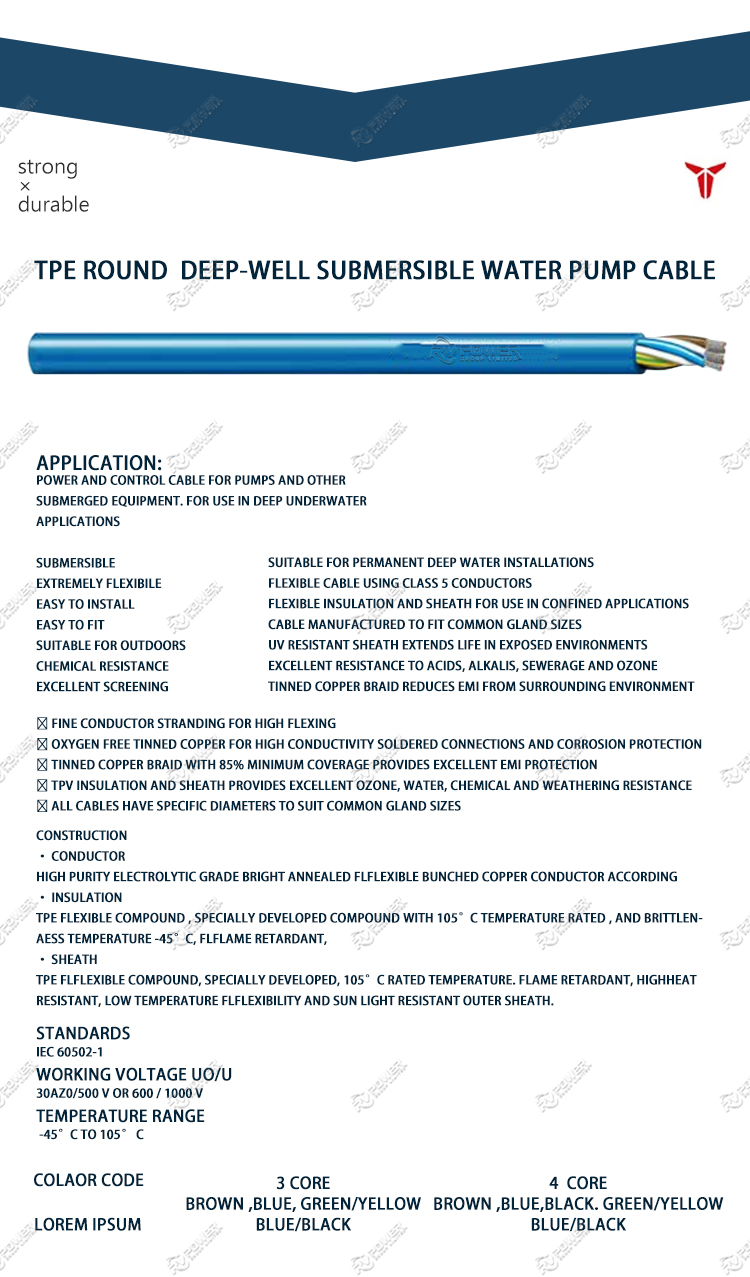
EPDM rubber sheath provides superior flexibility at low temperatures, oil resistance, and chemical resistance compared to PVC — preferred for deep well and wastewater applications where PVC becomes stiff and brittle.
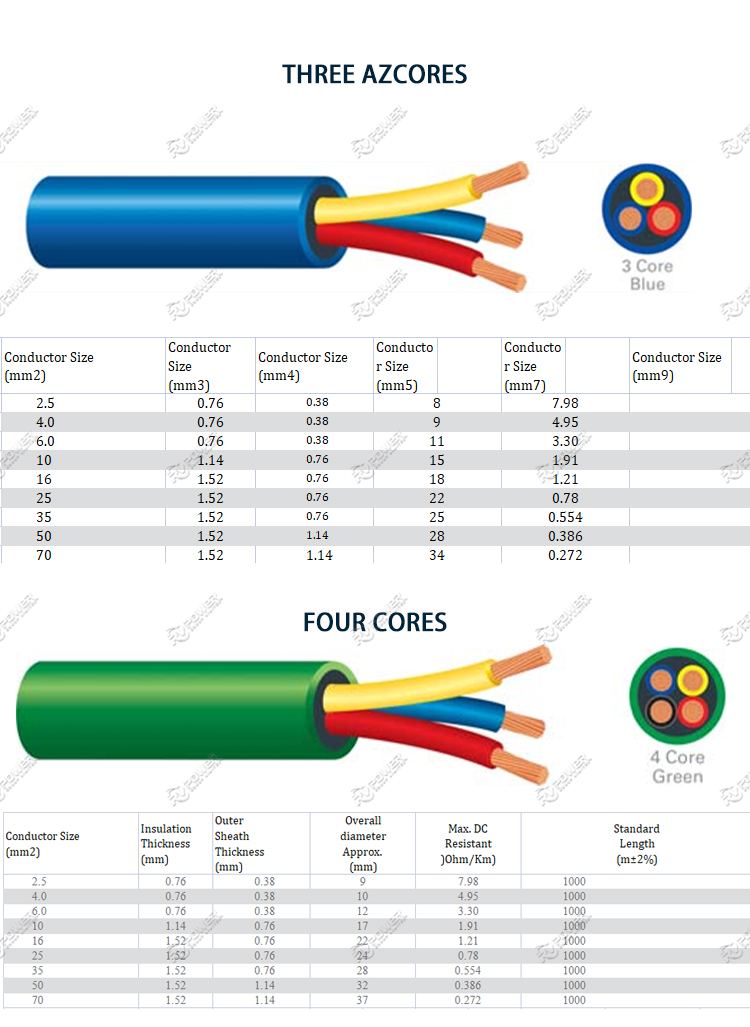
| Parameter | Value |
|---|---|
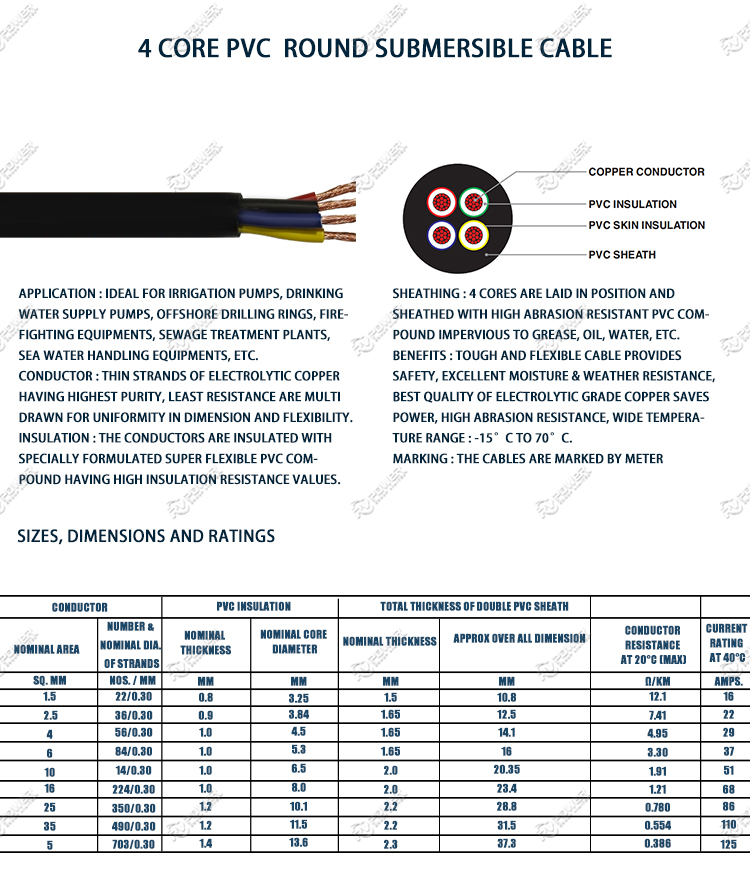
| Cores | 3 cores |
| Profile | Round |
| Rated Voltage | 0.6/1kV |
| Conductor | Tinned copper, flexible |
| Sheath | EPDM Rubber |
| Water Immersion | Permanently submerged rated |
| Temp Range | −5°C to +75°C (immersed) |
Standard cables fail within weeks when permanently submerged — water tracks along conductor strands and through micro-voids in the insulation, causing insulation resistance to fall and eventually short-circuit faults. Submersible cable construction prevents this with water-blocking fillers and tightly controlled insulation geometry.
Bare copper forms a conductive copper oxide layer when wetted — initially this is low-resistance, but as corrosion progresses the resistance increases, generating heat that accelerates failure. Tinned conductors maintain stable low resistance for the service life of the installation.
Voltage drop is a serious issue in deep well installations — a 200m cable run at 400V can see 15–20V drop, reducing pump motor torque and efficiency. Selecting the correct cross-section and voltage rating ensures the pump receives adequate terminal voltage at all operating depths.