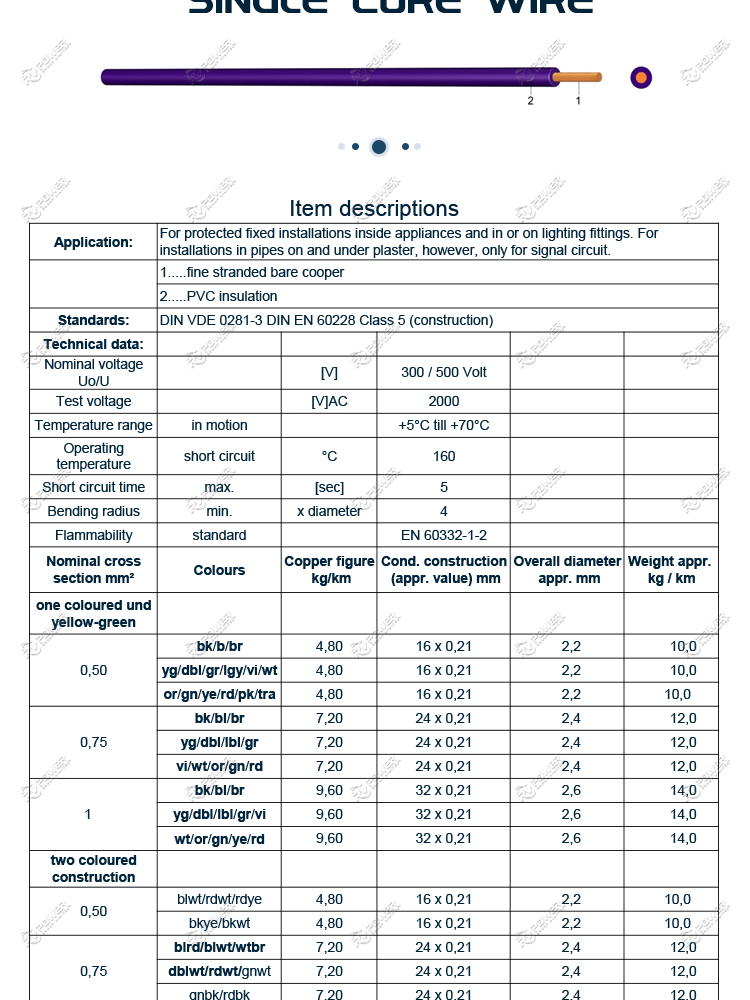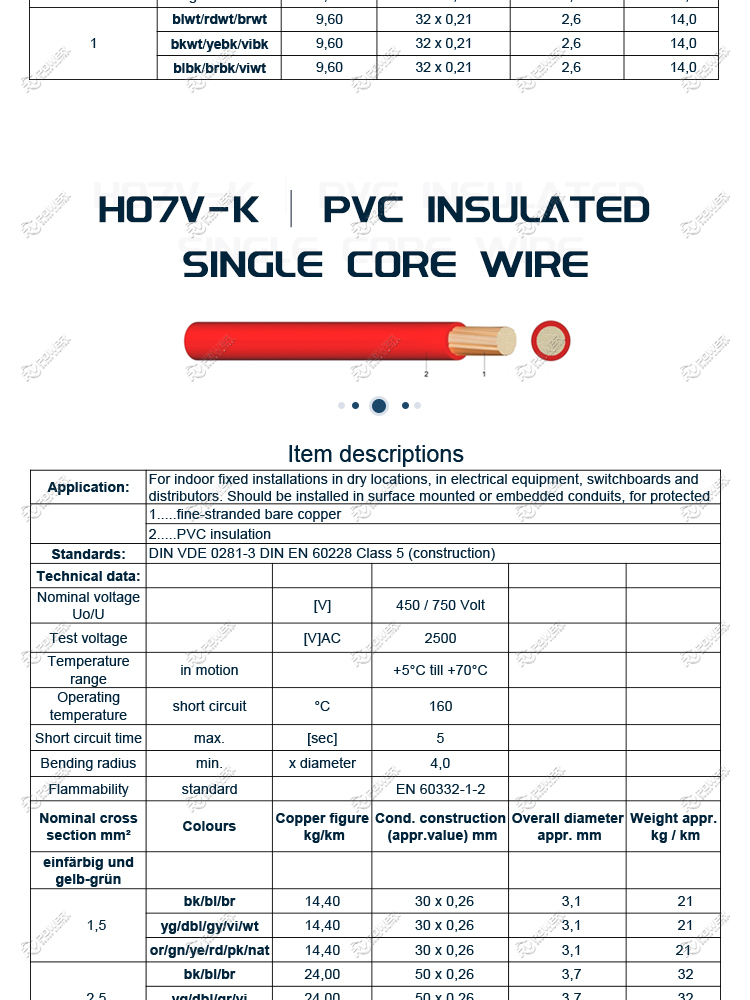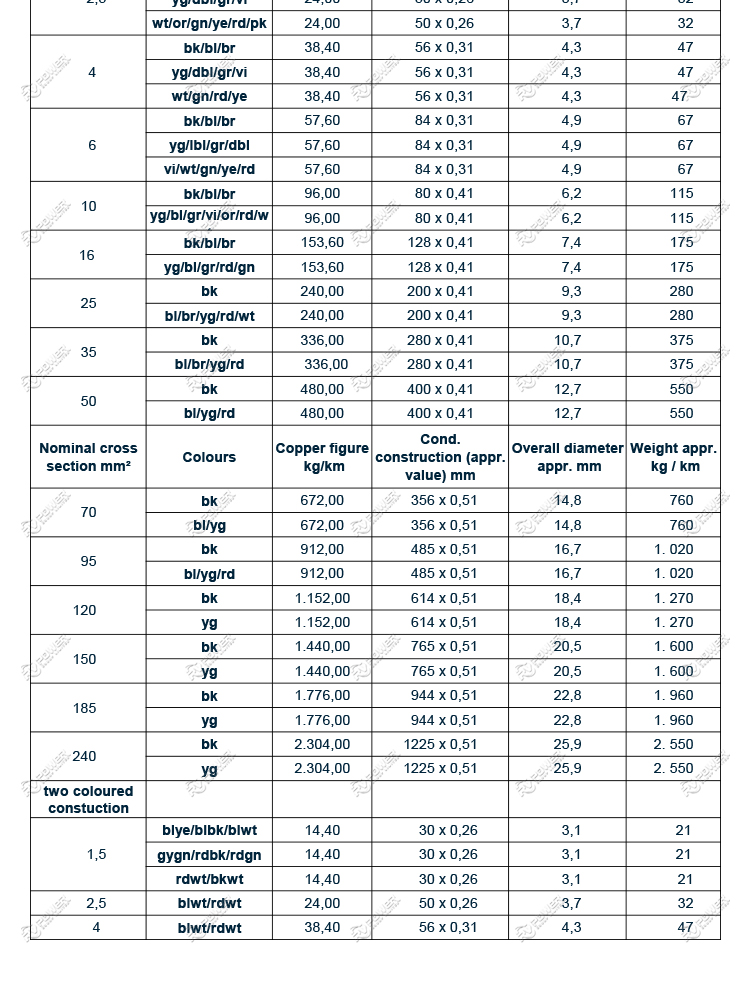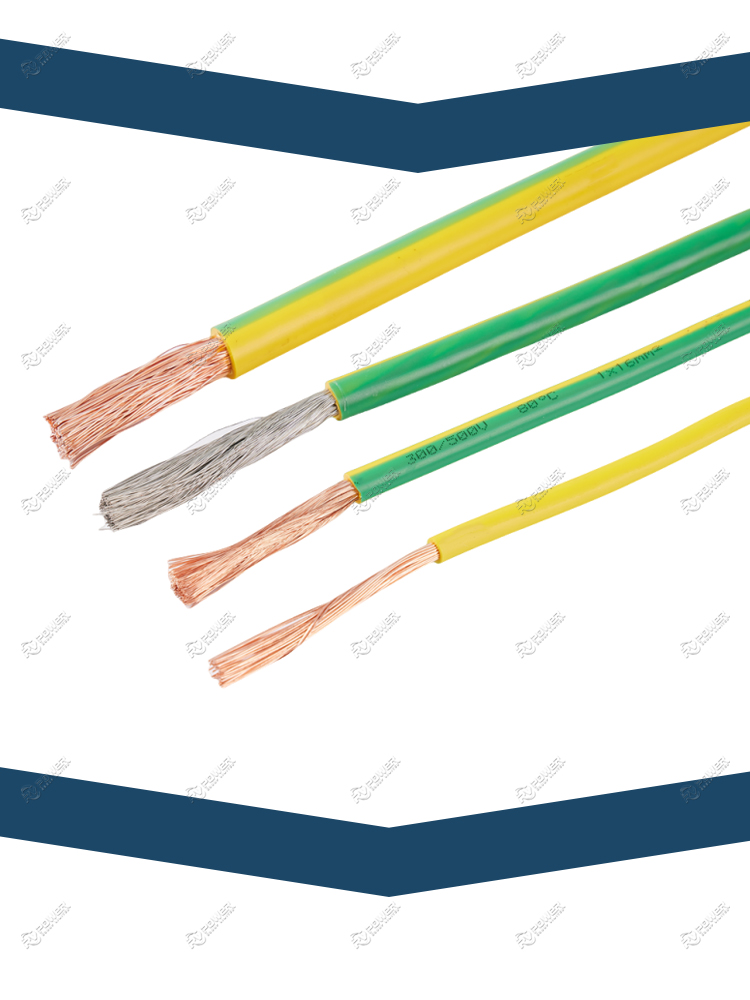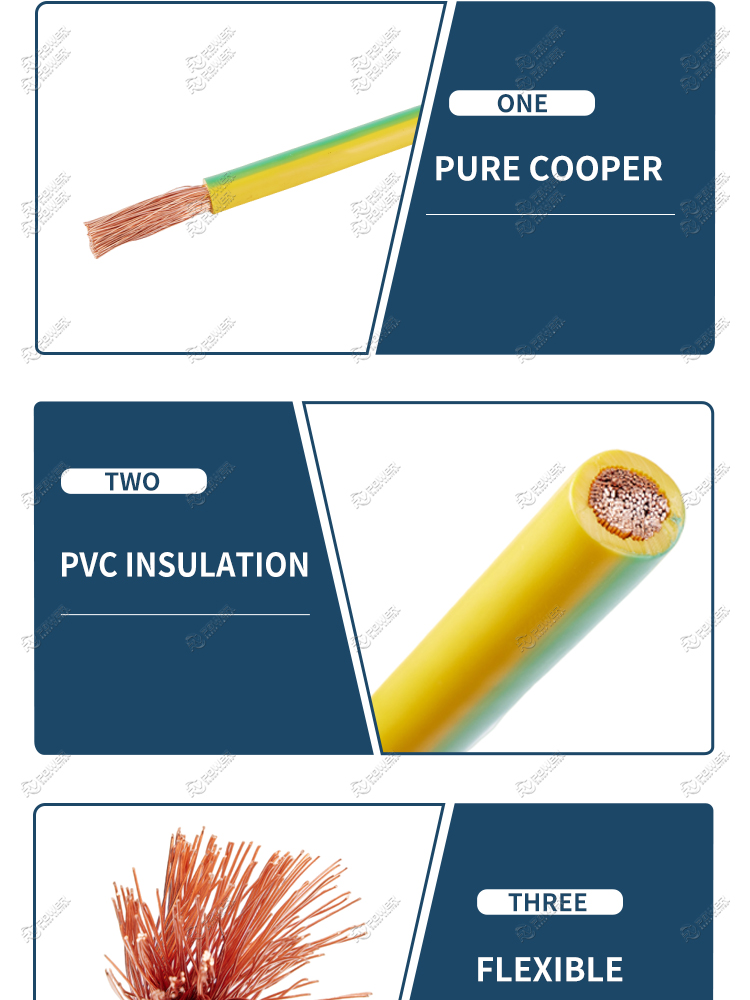
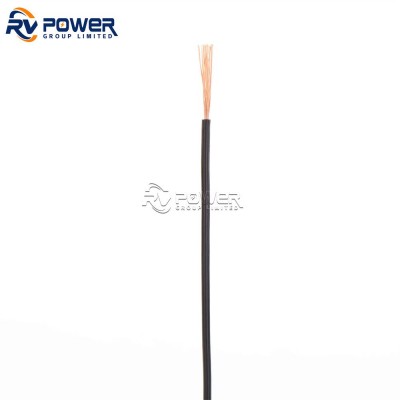
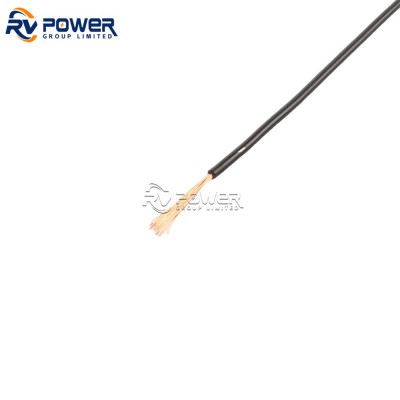
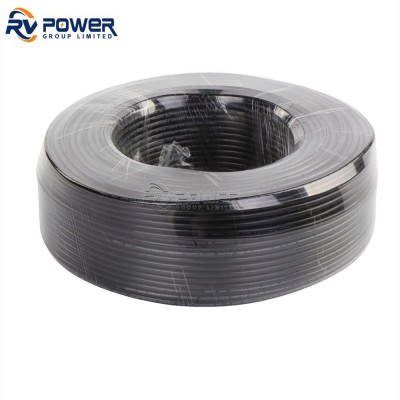
H07Z1-K and H07Z1-U LSZH halogen-free single core cable rated 450/750V. Class 5 flexible or solid conductor. For fixed wiring in enclosed buildings, public areas, and fire-safety-critical installations.
H07Z1-K (flexible, Class 5) and H07Z1-U (solid, Class 1) are the LSZH (Low Smoke Zero Halogen) equivalents of the standard H07V-K and H07V-U PVC single-core wires. Where PVC cables in fire conditions release hydrogen chloride gas — which is toxic, corrosive to electronics, and reduces visibility — LSZH cables produce only minimal smoke with no halogen acid gases. This is the critical advantage in enclosed buildings, underground installations, rail and metro systems, and offshore platforms where evacuation in a cable fire is difficult.
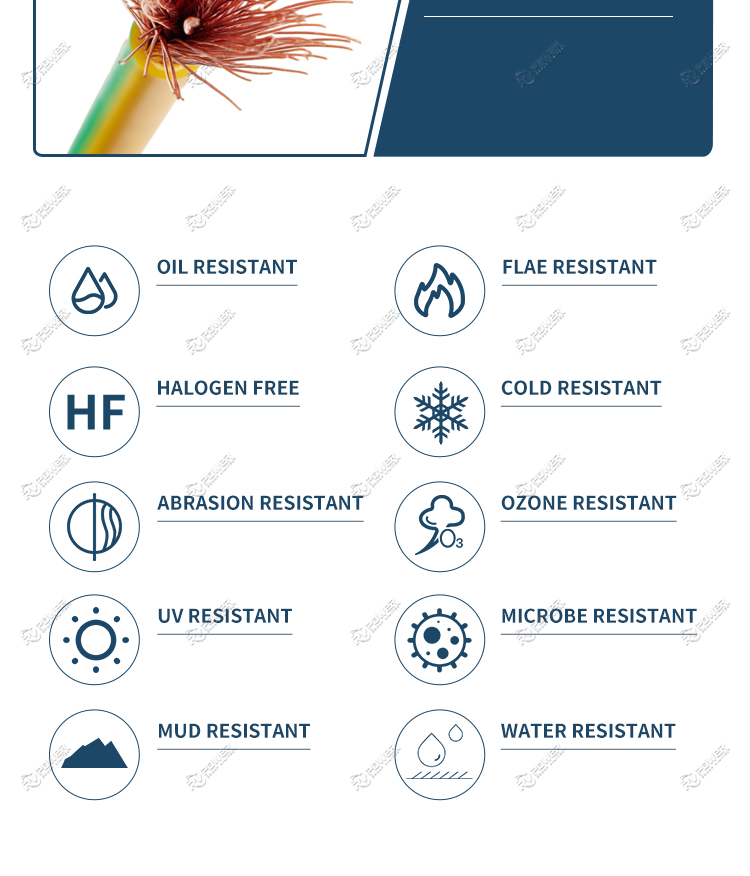
The LSZH designation covers both the insulation compound and sheath compound where applicable — meeting IEC 60754-1/2 for halogen content and IEC 61034-2 for smoke density. These cables are required by building regulations in many countries for wiring in public areas, transport infrastructure, and high-occupancy buildings.
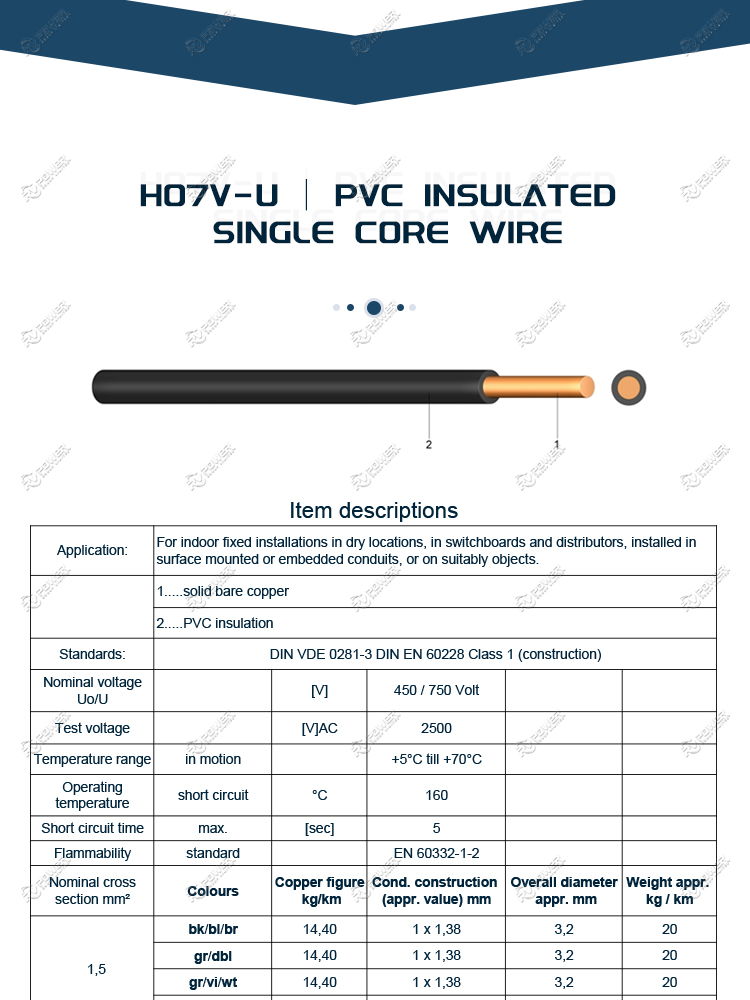
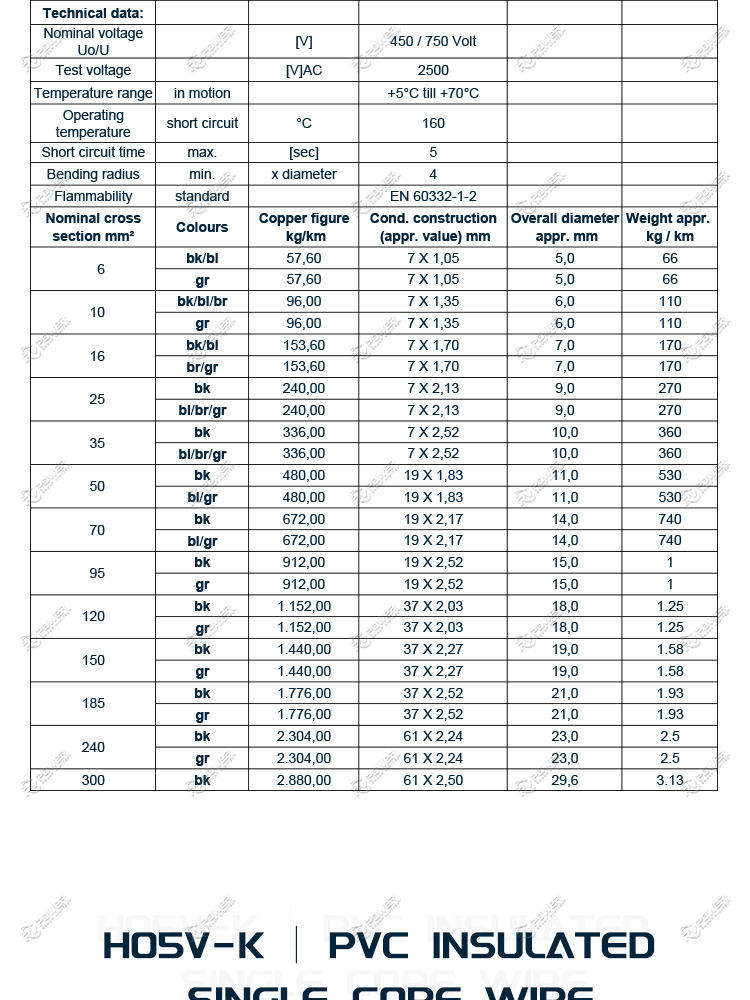
| Parameter | H07Z1-K | H07Z1-U |
|---|---|---|
| Rated Voltage | 450/750V | 450/750V |
| Conductor | Class 5 (flexible) | Class 1 (solid) |
| Insulation | LSZH | LSZH |
| Max Conductor Temp | 70°C | 70°C |
| Halogen Content | Zero (IEC 60754-1) | Zero (IEC 60754-1) |
| Smoke Density | IEC 61034-2 | IEC 61034-2 |
In a building fire, PVC cables release hydrogen chloride at concentrations that are immediately dangerous to life (IDLH) within seconds at typical cable fire temperatures. LSZH cables produce no halogen acid — the primary cause of fire-related incapacitation that prevents evacuation even when flames are distant.
Hydrogen chloride from burning PVC is also highly corrosive to electronic equipment — a PVC cable fire in a data centre or control room can destroy unaffected equipment through acid corrosion of circuit boards and connectors. LSZH cables eliminate this secondary damage mechanism.