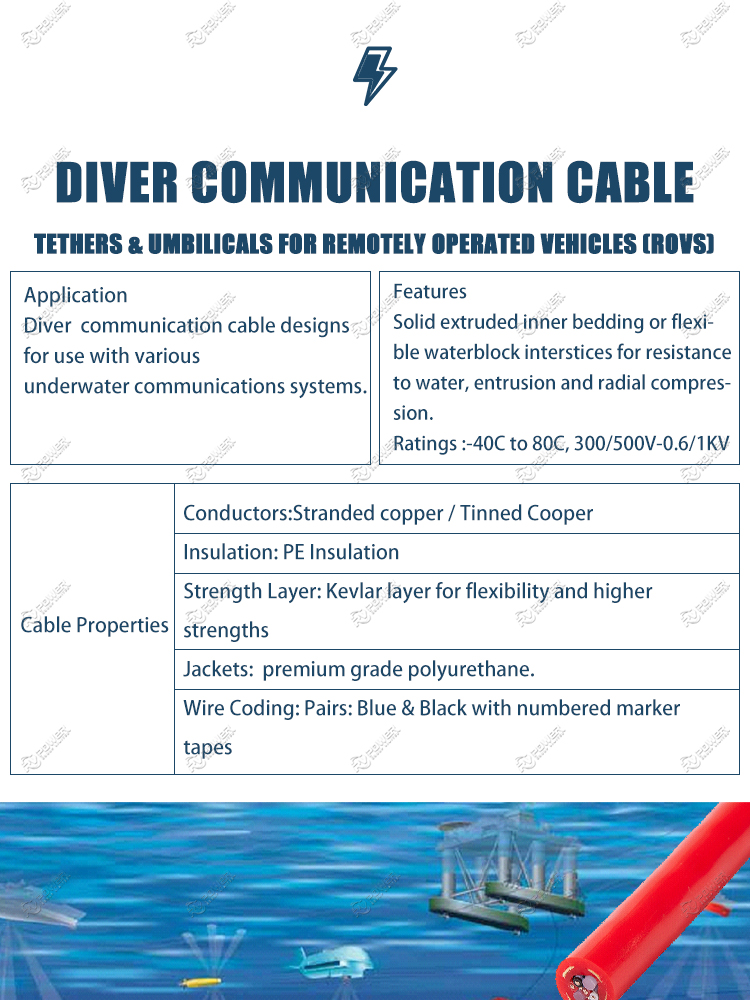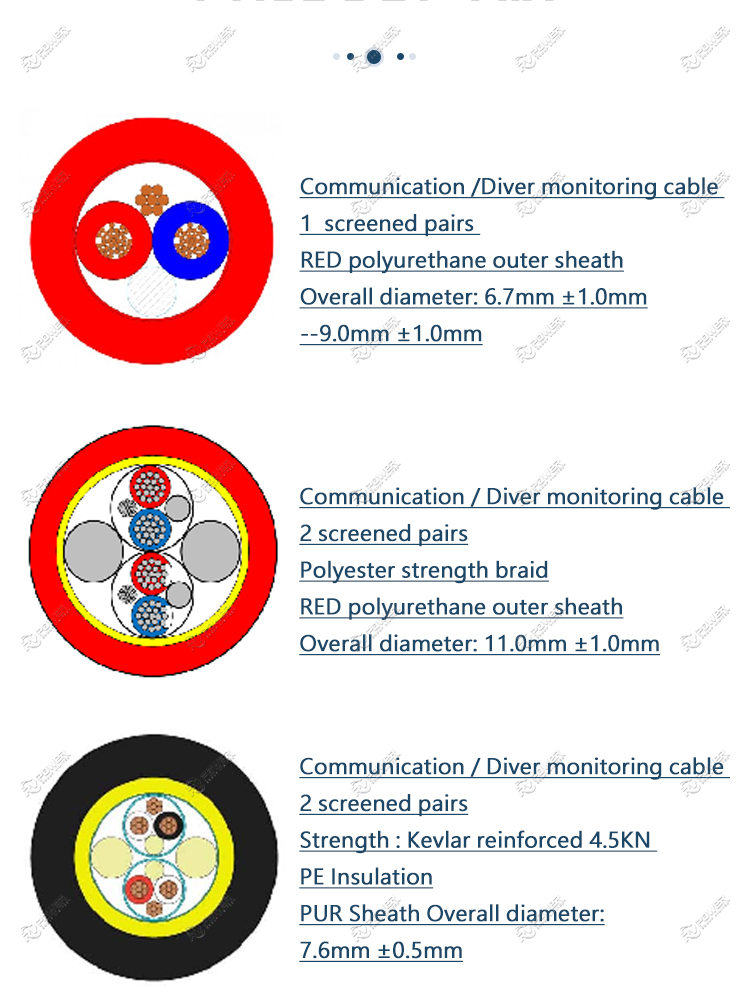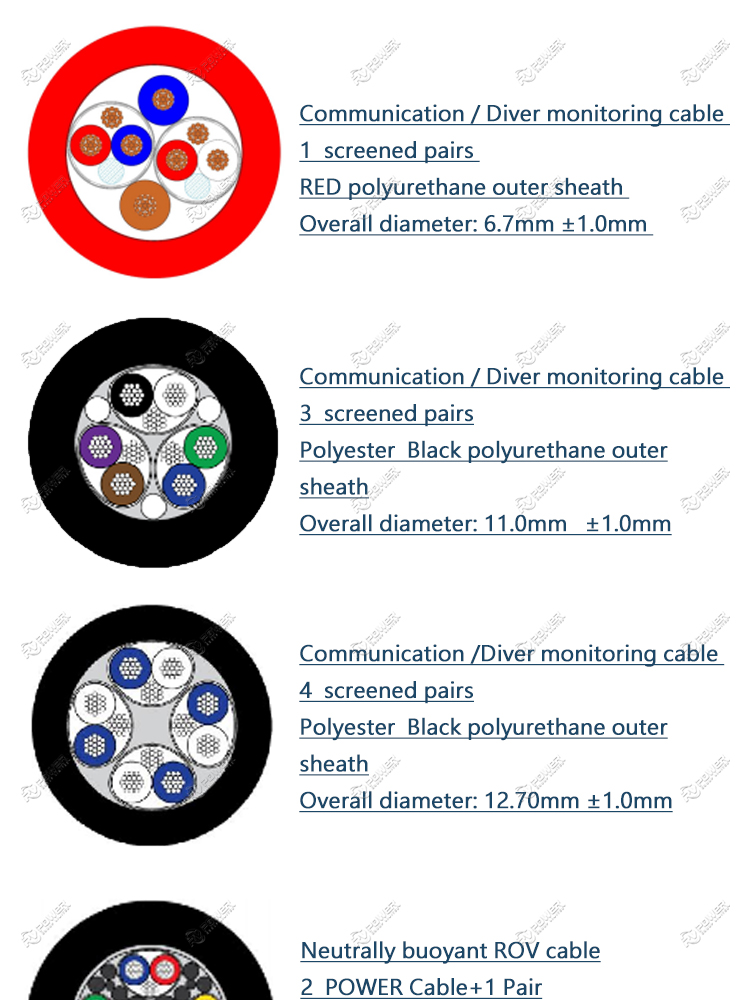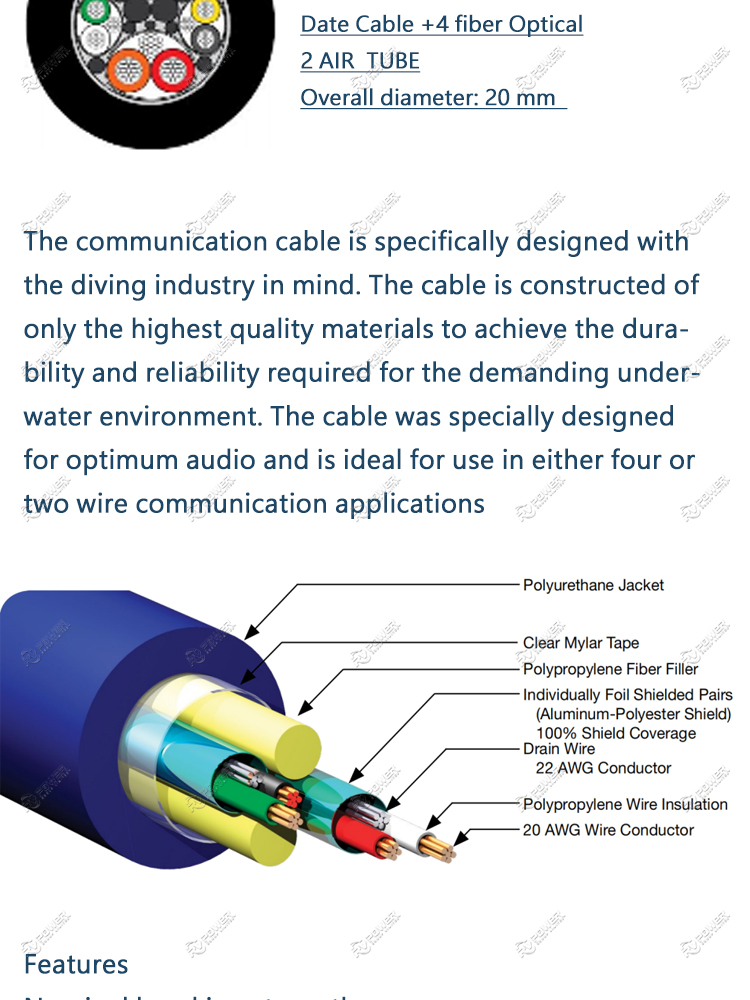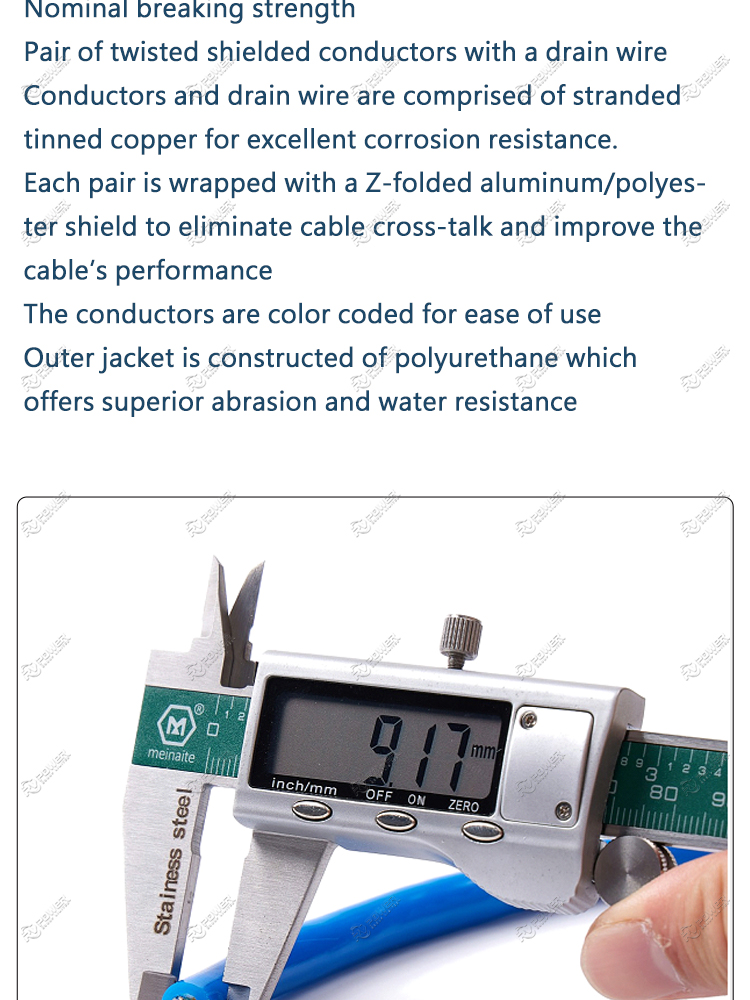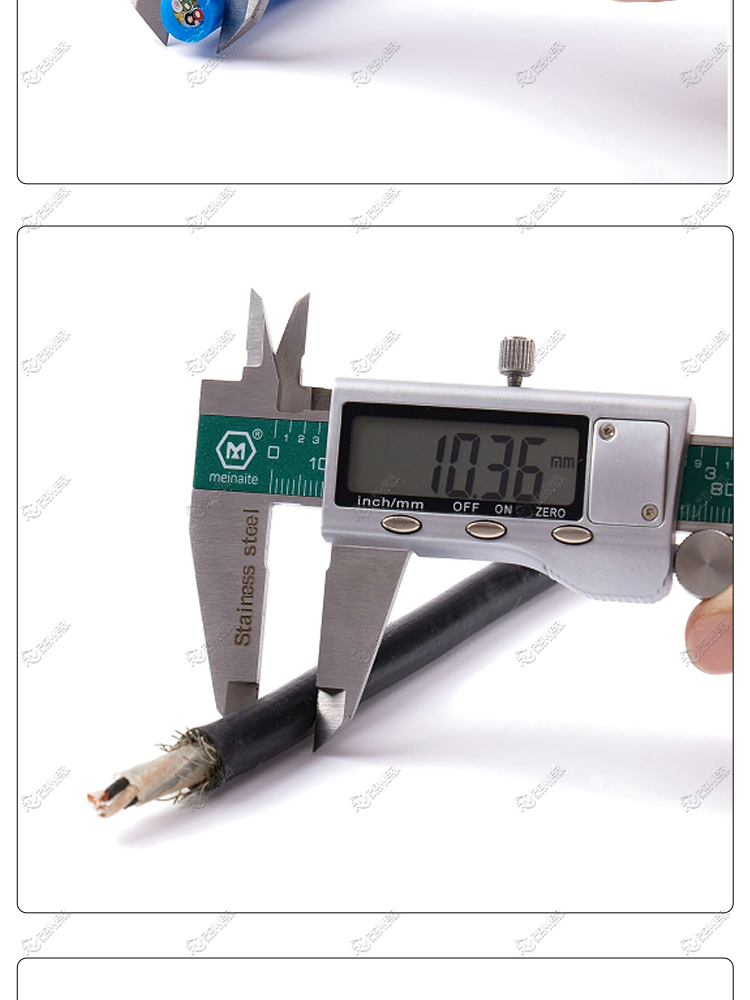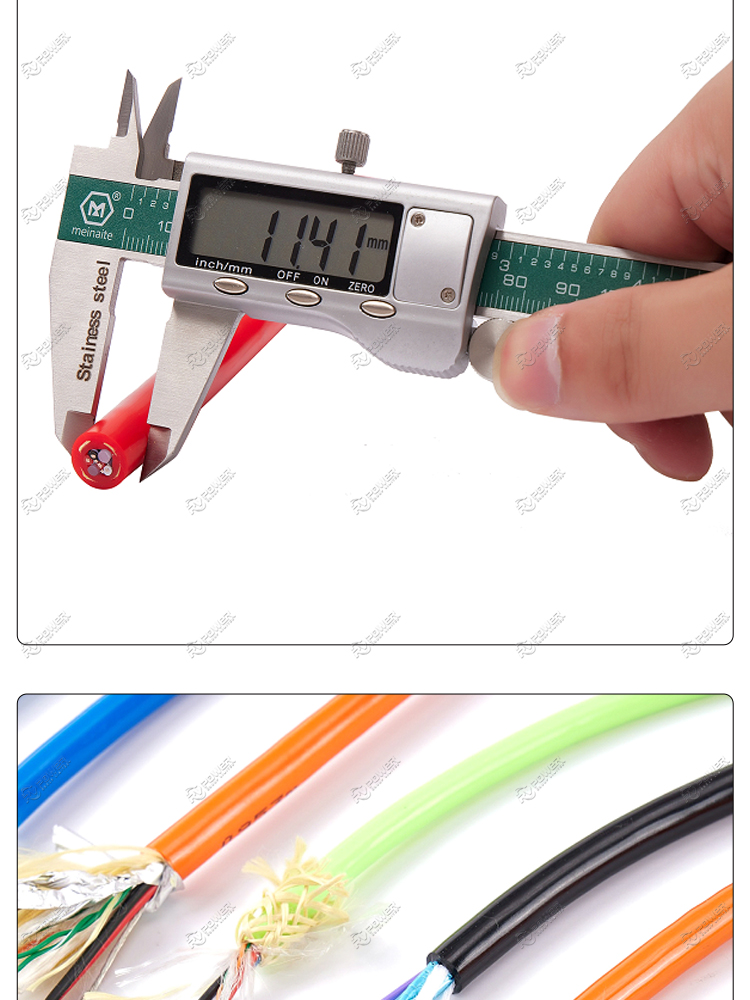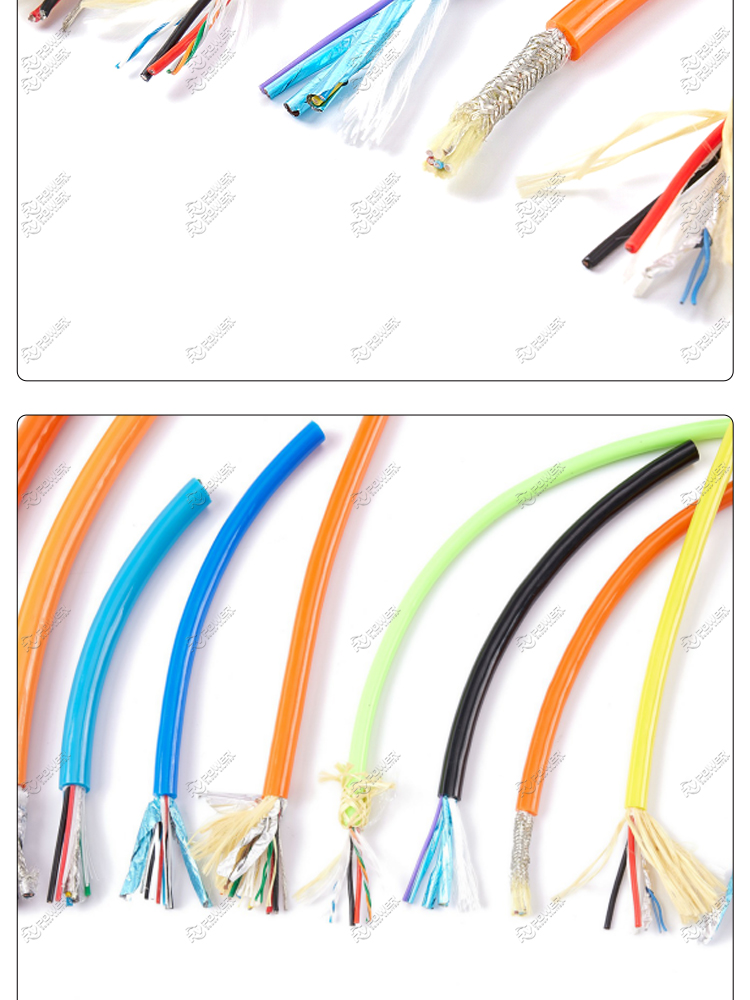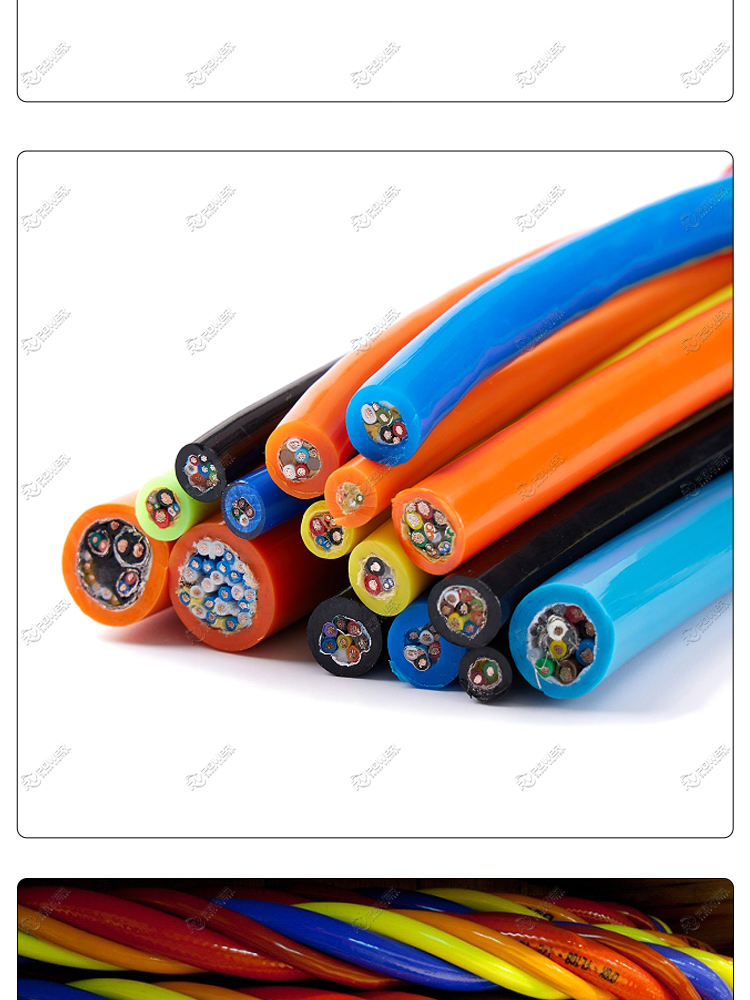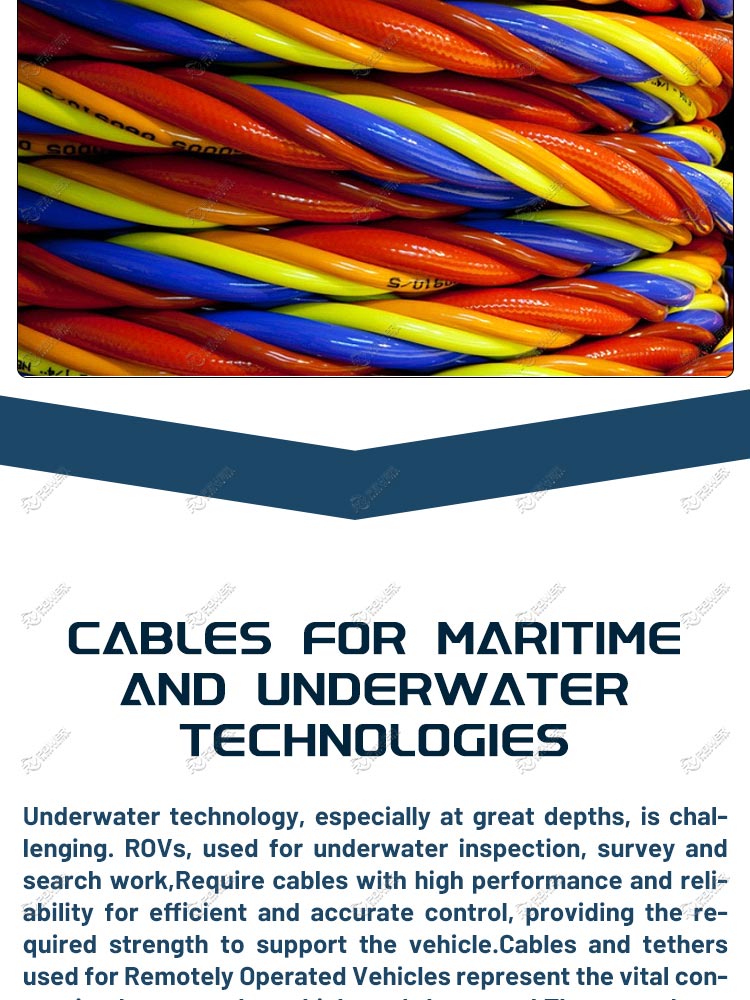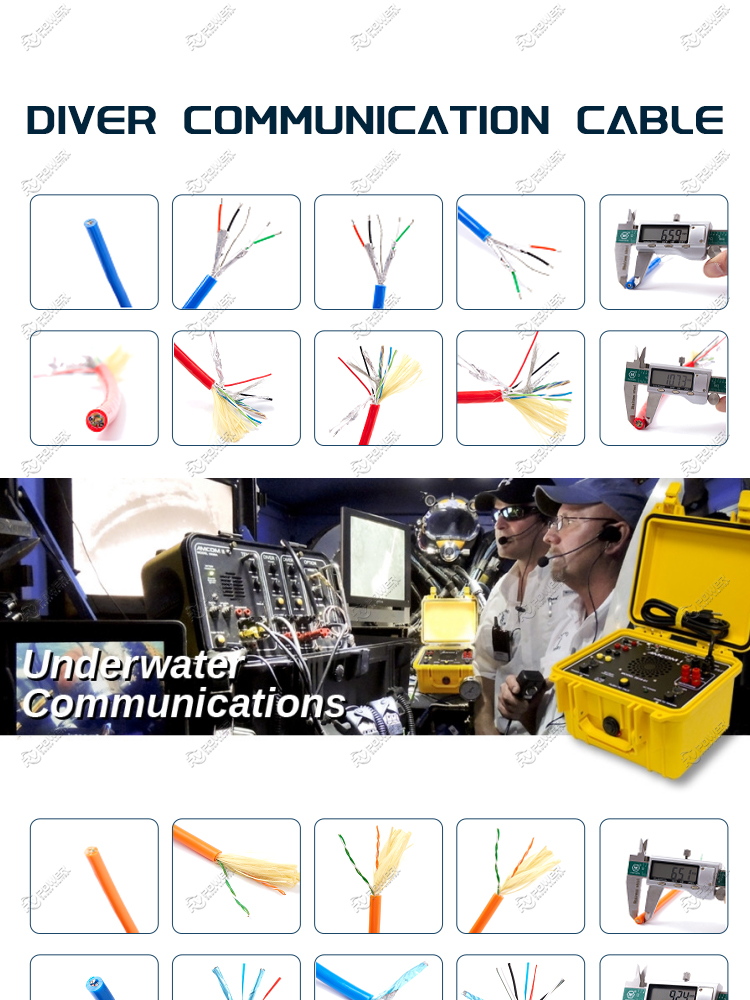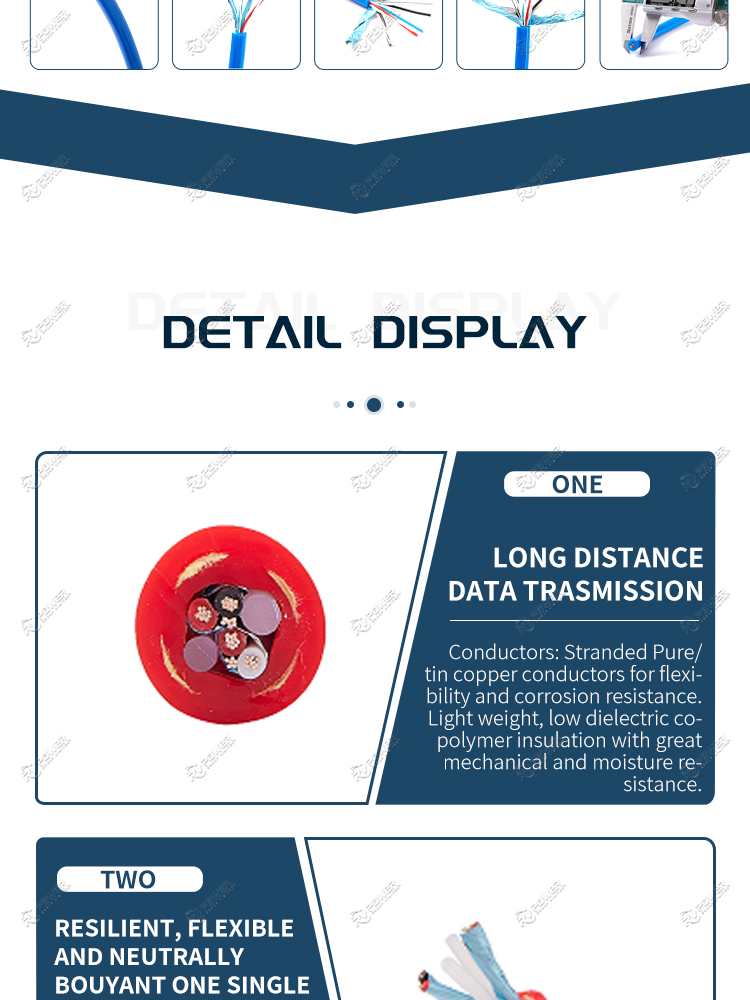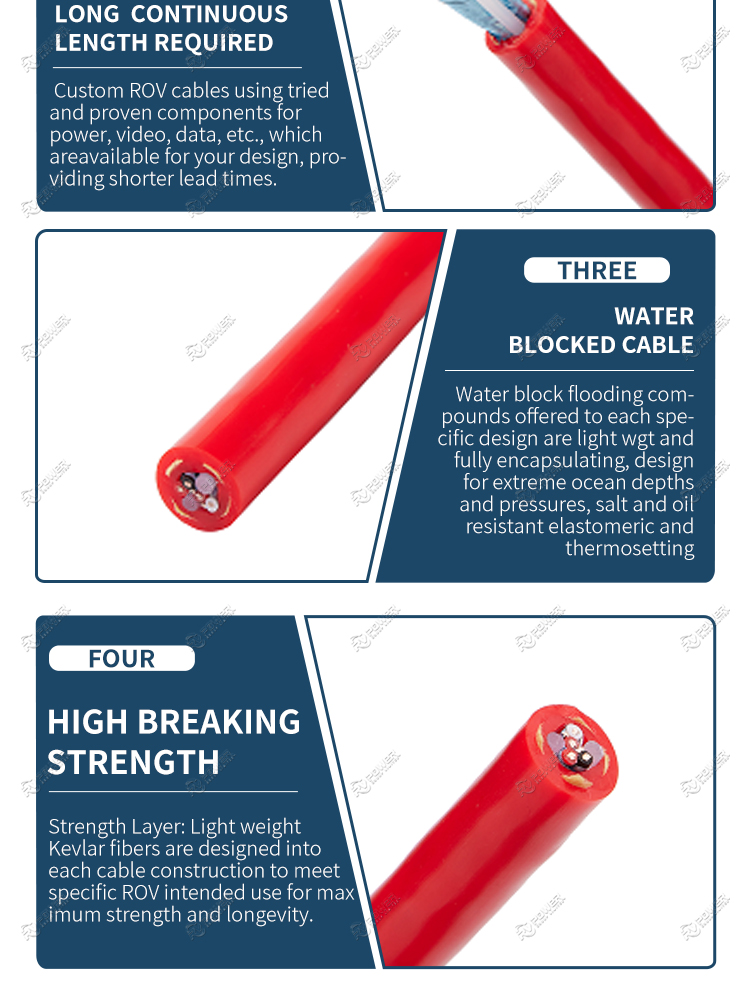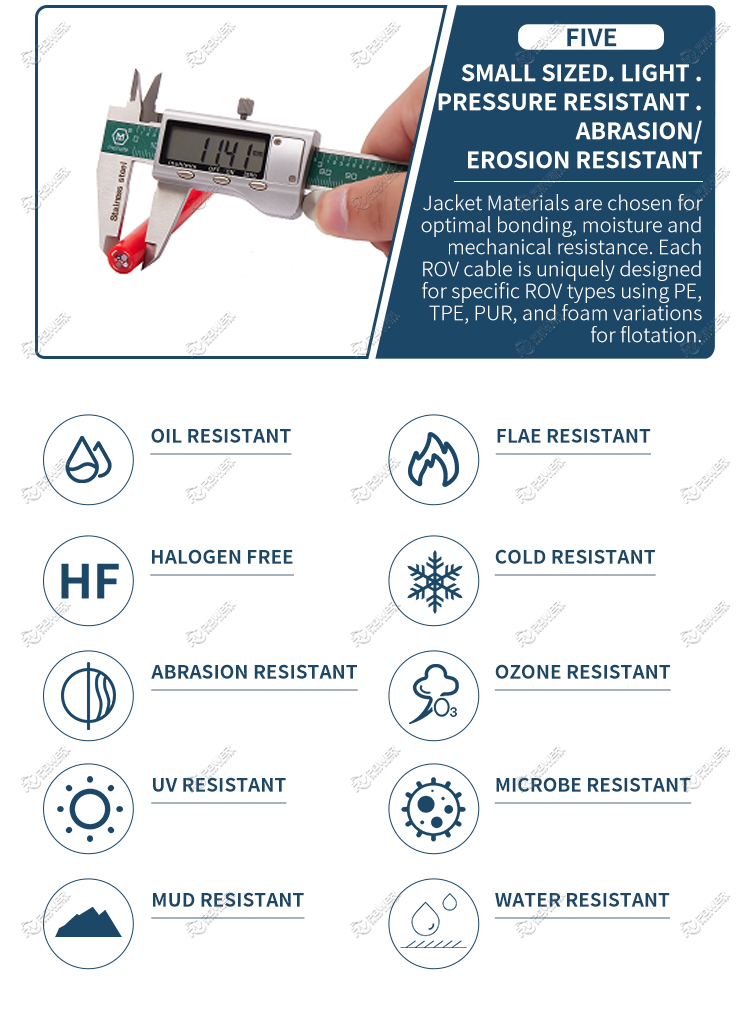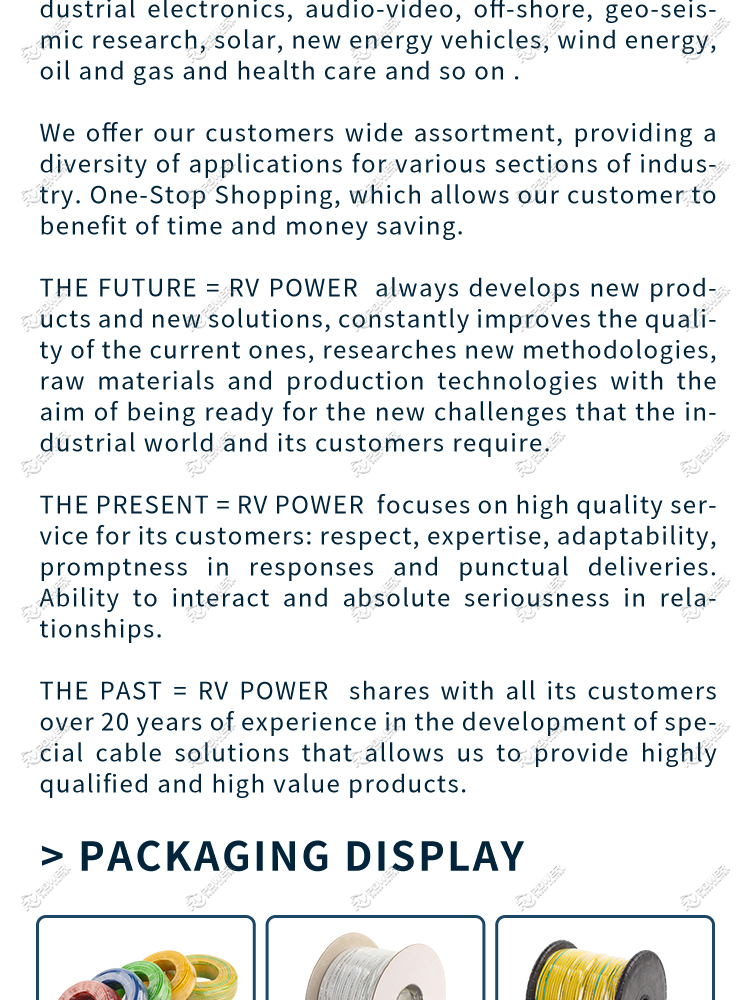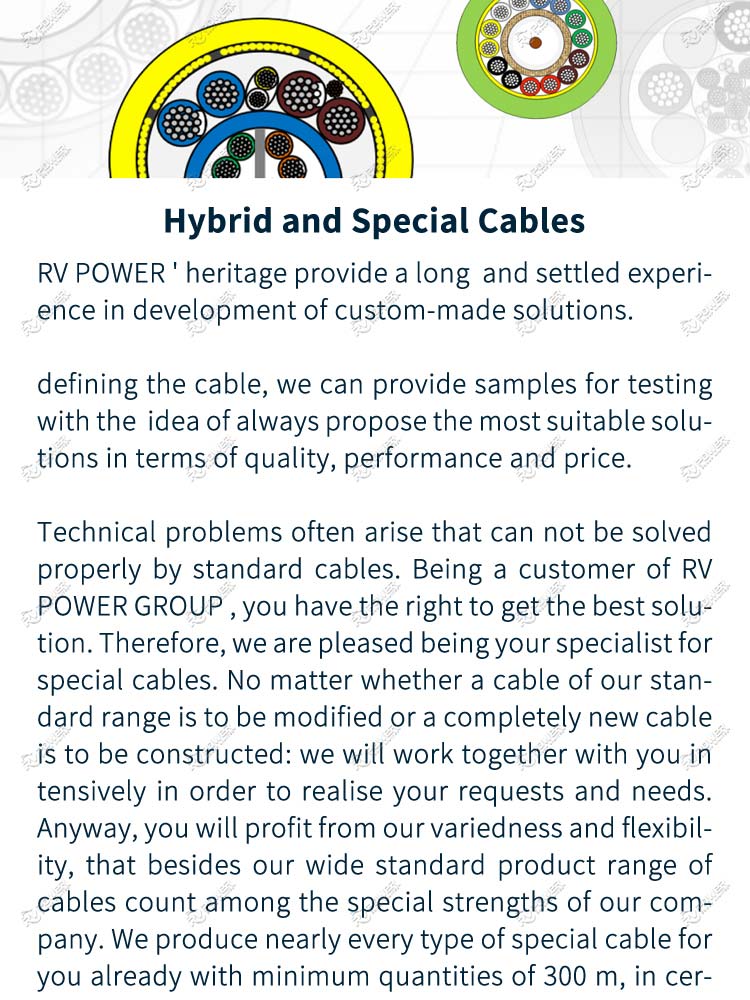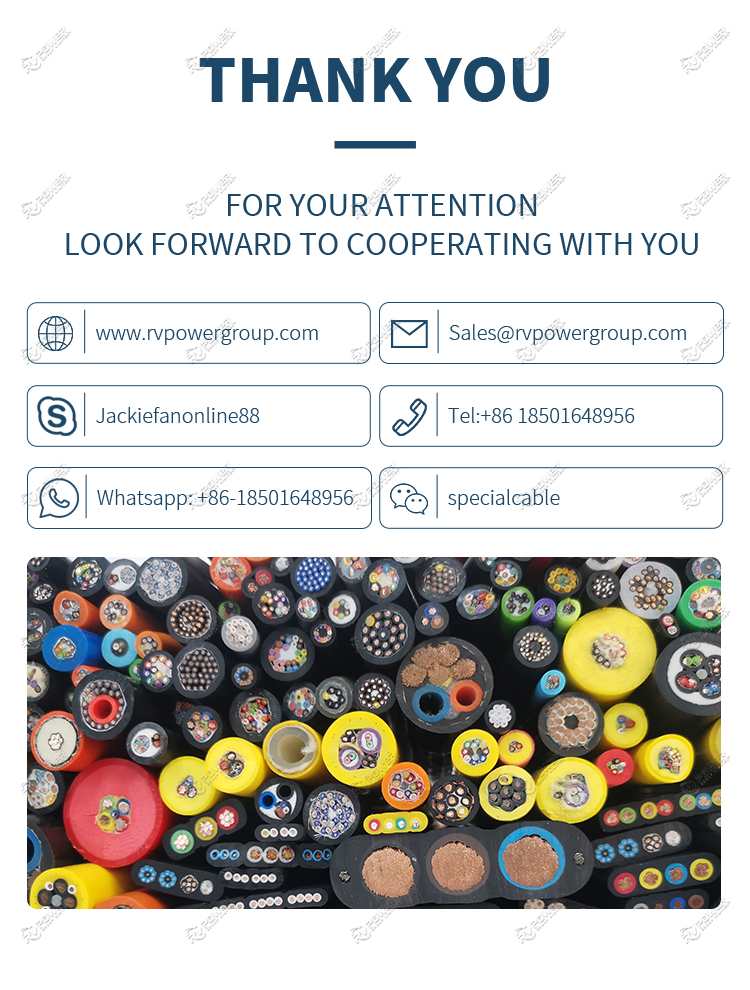

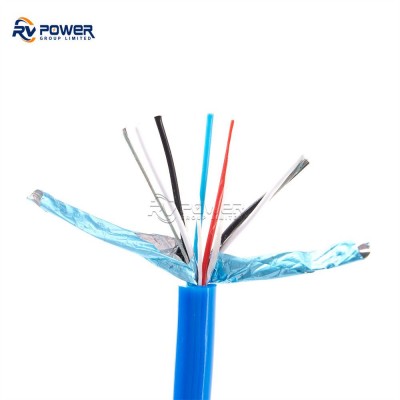
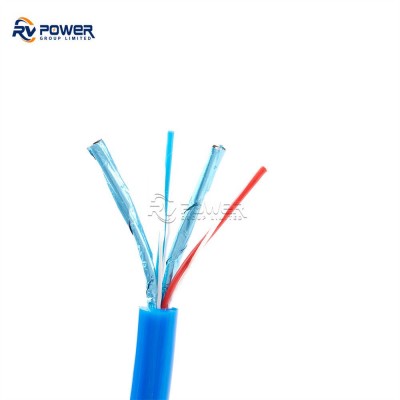
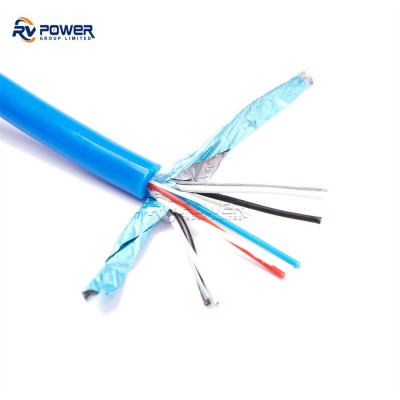
Communication / Diver Monitoring Cable with power cables for COMMERCIAL DIVING — commercial diving communication and monitoring cable with shielded twisted pairs, power conductors, and PU outer jacket. For surface-supply diver audio comms, depth and gas monitoring, and diver control systems. Tinned copper, screened pairs, flexible PUR jacket rated for continuous diving operations.
This Communication / Diver Monitoring Cable with power cables for COMMERCIAL DIVING is a purpose-designed communication and monitoring cable for the commercial surface-supply diving industry. It carries the bidirectional audio communication link between the surface diving supervisor and the diver underwater, alongside the analogue and digital data channels that transmit diver depth, breathing gas pressure, decompression status, and physiological monitoring data from the diver's suit and equipment back to the surface control panel.
Built with individually shielded twisted pairs and a durable polyurethane (PU) outer jacket, this cable is engineered to withstand the continuous mechanical abuse of commercial diving operations — deck handling, wave-zone abrasion, umbilical coiling and uncoiling on every dive — while maintaining reliable electrical performance throughout the service life of the umbilical assembly.
| Parameter | Light Comms Cable | Standard Monitoring | Full Control Cable |
|---|---|---|---|
| Audio Pairs | 1×2 STP 24AWG | 2×2 STP 22AWG | 2×2 STP 20AWG |
| Data Pairs (RS-485) | None | 1×2 STP 24AWG | 2×2 STP 22AWG |
| Power Conductors | 2×18AWG 300V | 2–4×16AWG 300V | 4×14AWG 300V |
| Shield (per pair) | Al/mylar + drain | Al/mylar + drain | Al/mylar + drain + overall |
| Conductor Material | Tinned stranded Cu | Tinned stranded Cu | Tinned stranded Cu |
| Insulation | PVC / XLPE 300V | XLPE 300V | XLPE 300V |
| Outer Jacket | PU/PUR (black/red) | PU/PUR (black/red) | PU/PUR (black/red) |
| Temperature Range | -25°C to +80°C | -25°C to +80°C | -25°C to +80°C |
| OD Range | 8–12 mm | 12–16 mm | 16–22 mm |
| Impedance (data pairs) | — | 120 Ohm ±10% | 120 Ohm ±10% |
| Depth Rating | 50 m | 50–300 m | 300 m |
| Jacket Colour | Black, red, yellow | Black, red | Black, red |
Standard industrial twisted-pair cables are designed for RS-485 data (DC to 100 kHz) or Ethernet (up to 500 MHz) — not for voice-frequency audio. Our audio communication pairs are designed with controlled capacitance (below 60 pF/m) and low loss in the 300–3,400 Hz voice band — the frequencies that determine intelligibility of underwater diver speech, which is already distorted by helium breathing mixtures in deep saturation diving. Using a data cable for audio communication reduces intelligibility; purpose-designed audio pairs maintain clear voice communication in all diving conditions.
Many diving cables use a single overall shield for the entire cable — this protects against external interference but does nothing to prevent crosstalk between pairs inside the cable. Audio and RS-485 data pairs running inside the same jacket without individual shields couple signals between them — the RS-485 data clock appears as buzzing in the audio channel; audio peak voltages cause data framing errors. Individual per-pair shields eliminate internal crosstalk completely, ensuring audio and data systems do not interfere with each other.
In a diving emergency, every second of deck team response time matters. A red-jacketed communication cable is immediately identifiable among the bundle of black cables, hoses, and lifting equipment on a diving support vessel deck — the standby diver can locate the communication umbilical without searching through the bundle. Red identification is an IMCA-recommended practice for the diver's primary communication element in multi-element umbilical systems.
North Sea, Arctic, and deep cold-water commercial diving requires umbilical cables that remain flexible at seawater temperatures of 2–4°C. Standard PVC jacket loses flexibility below +5°C — becoming stiff and difficult to handle on deck, creating kinking risk at the diver entry point where the umbilical transitions from the warm vessel deck to cold seawater. PUR jacket maintains full flexibility to -25°C — there is no cold-stiffening on deck or at the water surface, and the umbilical handles identically in winter Arctic operations as in summer tropical diving.
| Configuration | Audio | Data | Power | Jacket | OD (mm) |
|---|---|---|---|---|---|
| Basic audio + power | 1×2 STP 24AWG | None | 2×18AWG | Black PUR | 8–10 |
| Audio + RS-485 | 1×2 STP 24AWG | 1×2 STP 24AWG | 2×16AWG | Black/Red PUR | 12–14 |
| Dual audio + data + power | 2×2 STP 22AWG | 1×2 STP 22AWG | 2–4×16AWG | Red PUR | 14–18 |
| Full monitoring (4×2 STP) | 2×2 STP 20AWG | 2×2 STP 22AWG | 4×14AWG | Black PUR | 18–22 |
| Screened + overall braid | 2×2 STP 22AWG | 2×2 STP 22AWG | 4×16AWG | Black PUR + braid | 18–24 |
| Spiral armoured | 2×2 STP 22AWG | 1×2 STP 24AWG | 4×14AWG | Armoured PUR | 24–32 |
| Red hi-vis identifier | 2×2 STP 22AWG | 1×2 STP 24AWG | 2×16AWG | Red PUR | 14–16 |
Before deploying a new communication cable, verify compatibility with your surface communication system (OTS Superphone, Kirby Morgan SSB, Divex Buddy Phone, or equivalent). Check that the audio pair conductor resistance at full umbilical length does not exceed the line impedance specification of your surface unit — typically, 24 AWG audio conductors provide adequate performance to 100 m; 22 AWG for 100–300 m; 20 AWG for 300+ m. Excessive conductor resistance reduces received audio level and increases the noise floor, degrading voice intelligibility at depth.
If the data pairs carry an RS-485 monitoring bus, install 120-ohm termination resistors at both the surface controller and the diver-end data logger — the characteristic impedance of the data pair is 120 ohms and termination is required for error-free operation at baud rates above 9,600 bps on umbilical lengths over 30 m. Missing termination causes reflections that corrupt data frames and generate false sensor readings on the surface monitoring panel.
Inspect the full umbilical jacket after every 10 dives or monthly, whichever comes first. Pay particular attention to three zones: (1) the first 2 m from the diver-end connector, which experiences the most repeated flexure during diver movement; (2) the deck edge/sheave contact zone, which suffers continuous abrasion; (3) the drum entry point, where the cable transitions from straight to spooled and experiences maximum bending stress. Any visible jacket break must be repaired with compatible PUR jacket repair compound before the next dive — seawater tracking inside the jacket to audio pair terminations causes sudden total audio failure underwater.
Specify audio pair count and AWG, data protocol (RS-485 / analogue), power core AWG, jacket colour (black / red), armour requirement, and total length — we supply the exact communication cable for your surface-supply diving system.
STP audio pairs | RS-485 monitoring | PUR jacket | Red hi-vis option | Custom lengths to 500 m