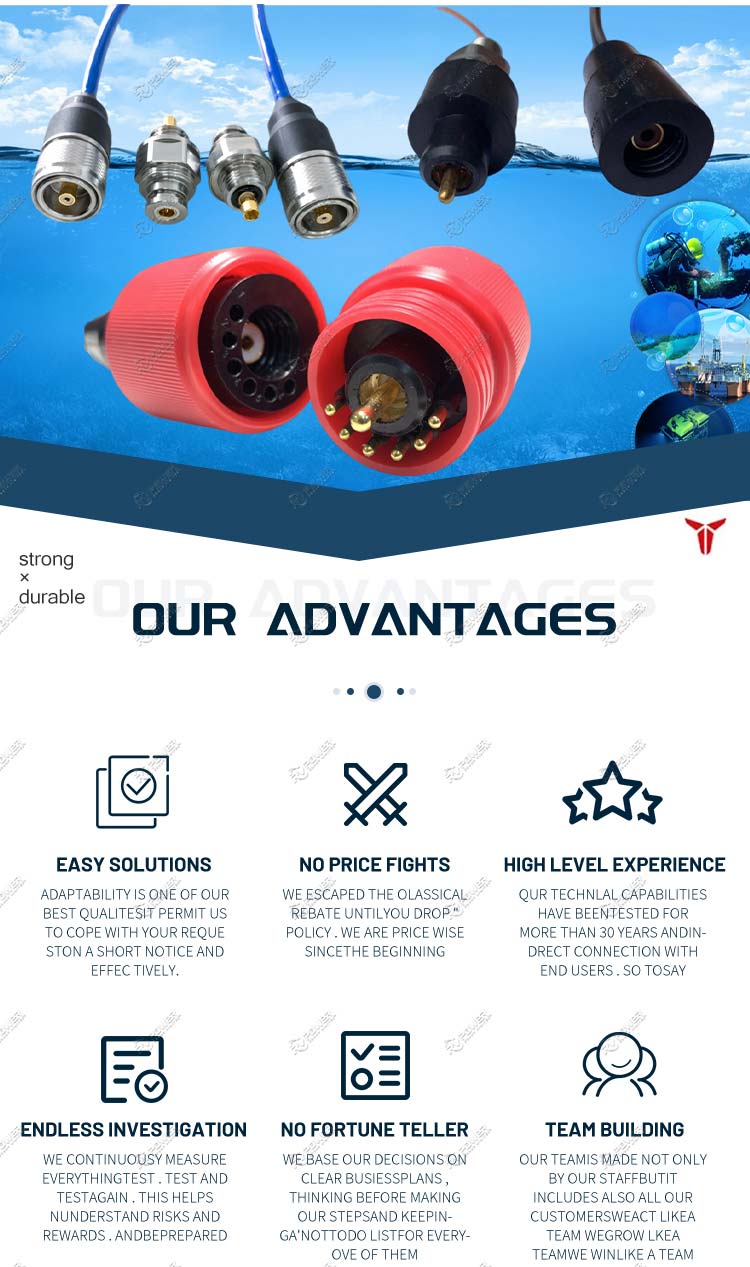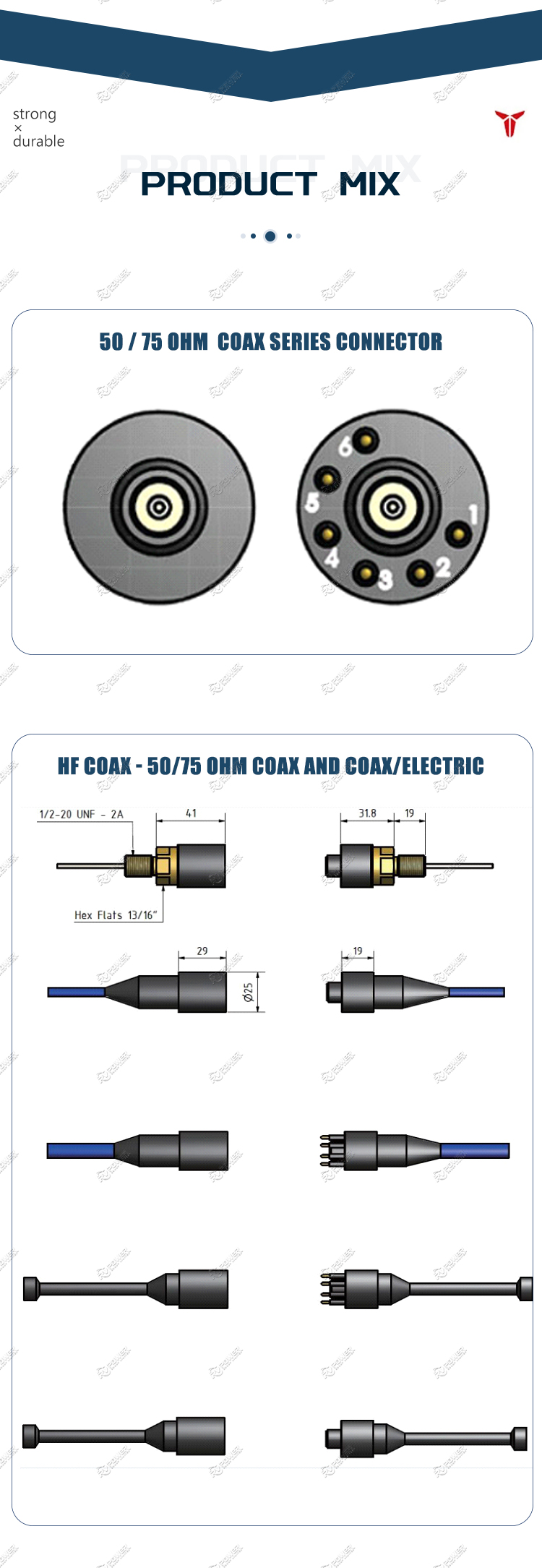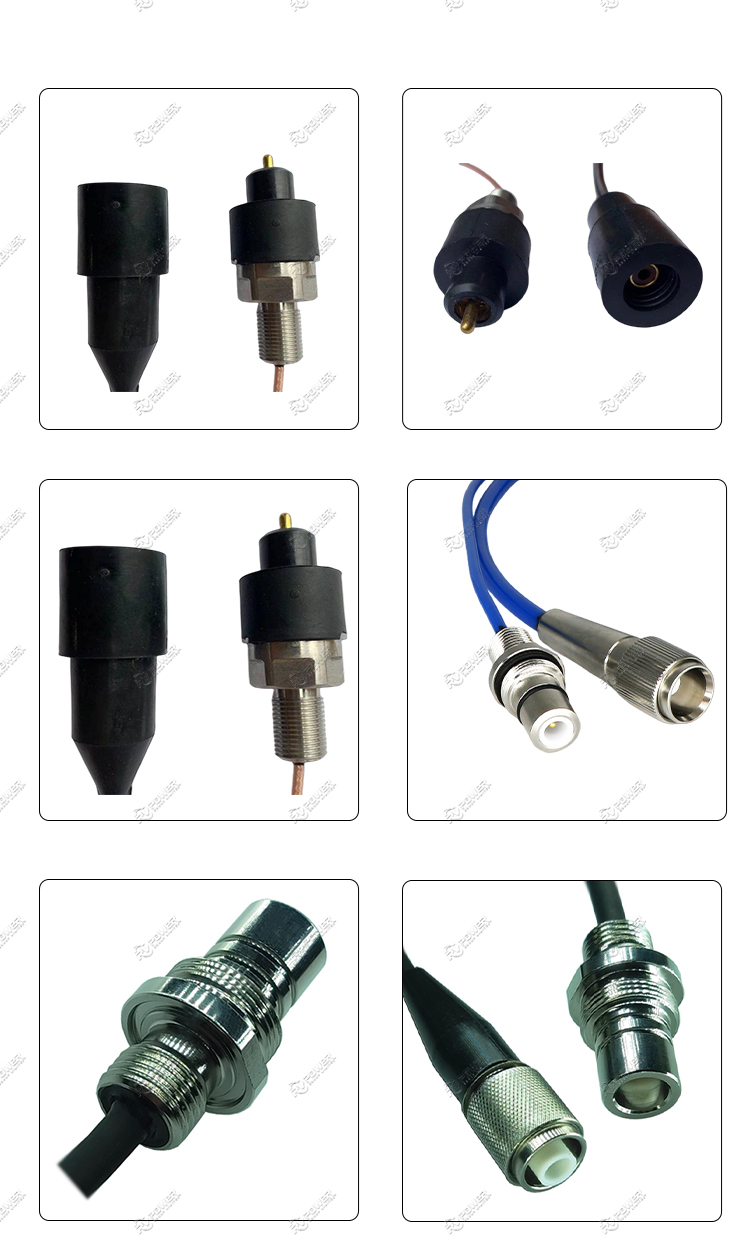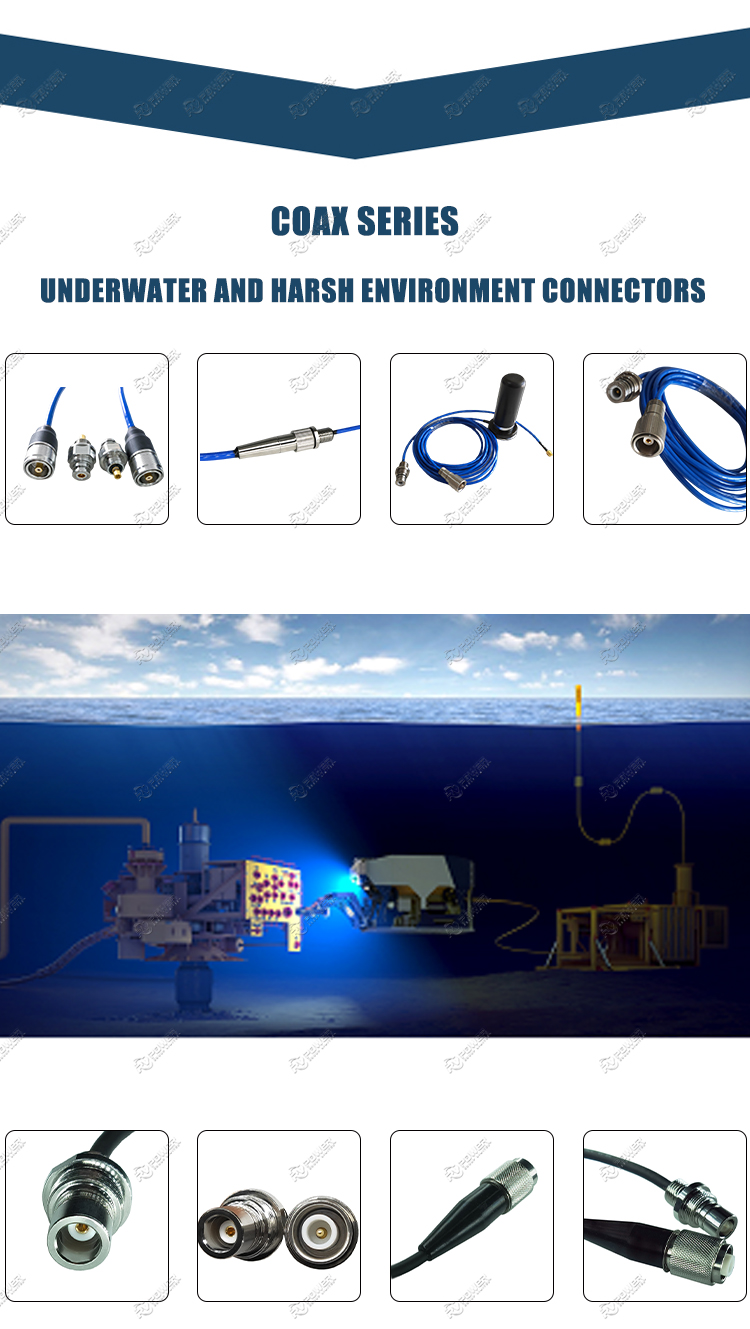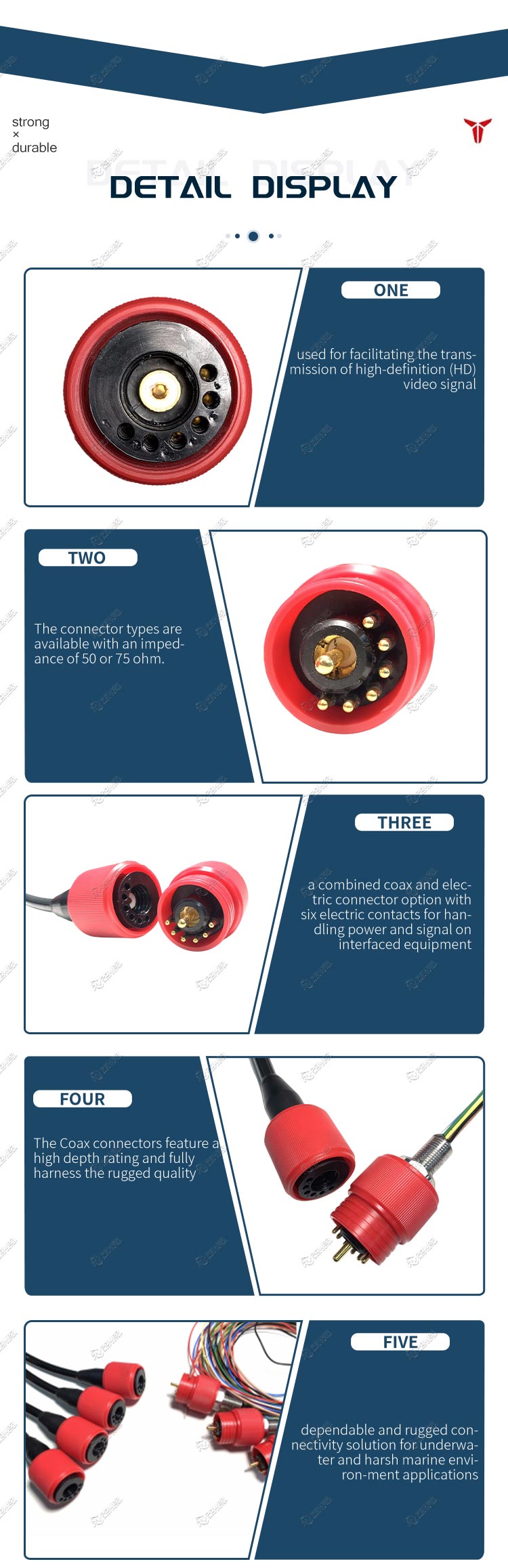

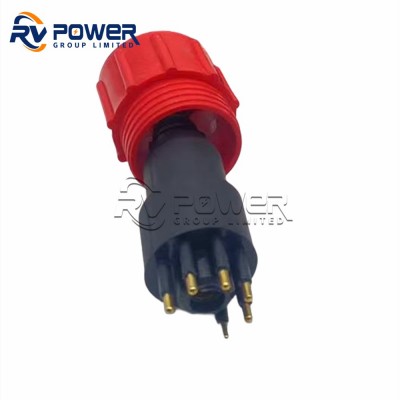
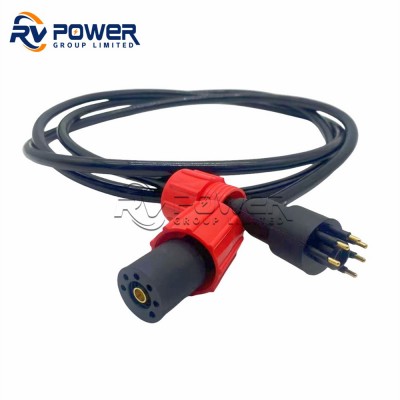
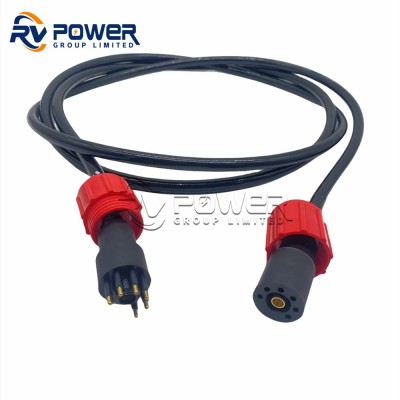
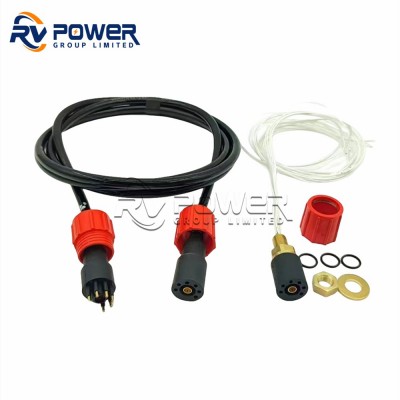
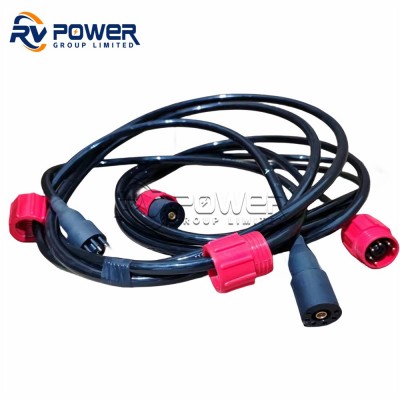
Precision-engineered 50 Ohm and 75 Ohm male in-line plugs for subsea coaxial connections. Rated to 3,000 meters, featuring a vulcanized neoprene body and gold-plated contacts for high-frequency signal transmission in ROV and underwater sensor systems.
High-definition video and precision telemetry data are only as reliable as the weakest link in your subsea signal chain. When that weak link is a mid-cable splice or a poorly terminated in-line connector, you pay for it in degraded image quality, corrupted sensor data, and ultimately, failed missions. The HF50CXIL6M (50 Ohm) and HF75CXIL6M (75 Ohm) are precision-engineered, factory-terminated male in-line coaxial connectors that provide an impedance-controlled, pressure-rated signal path at every cable junction in your subsea system — from the ROV tether extension to the oceanographic instrument harness.
As the male (plug) half of the HF Coax in-line connector pair, the HF50CXIL6M / HF75CXIL6M engages with the corresponding female in-line receptacle (HF50CXIL6F / HF75CXIL6F) or female bulkhead receptacle (50CXBH6F / 75CXBH6F) to form a fully sealed, locking coaxial junction rated to 300 Bar / 3,000 meters. Standard lead time: 1 to 2 weeks. No minimum order quantity.
[Get a 2-Hour Technical Quote] [Download Free 3D STEP File & Datasheet]
In the lifecycle of a subsea coaxial system, the in-line male connector is the component that bears the most operational stress. It is handled repeatedly on deck, gripped by technicians wearing gloves, dropped occasionally, dragged across grating, and subjected to thousands of thermal cycles between cold abyssal water and warm surface air. It is also the component most frequently field-replaced — meaning its form factor, mating reliability, and compatibility with the installed female receptacle base are mission-critical specifications, not optional features.
Yet in procurement cycles, the in-line male connector is often the last component specified, frequently selected on price alone, and rarely subjected to the same engineering scrutiny as the pressure housings and sensors it connects. This is the gap our HF50CXIL6M / HF75CXIL6M was designed to fill: a connector that is engineered with the rigorous standards of the instruments it supports, priced to eliminate the false economy of inferior alternatives, and available on a timeline that matches the operational pace of modern subsea programs.
Mechanism 1 — Mating-Face Impedance Discontinuity: At the moment of mating, the center conductor of the male plug must engage the center socket of the female receptacle with sufficient contact force and alignment precision to create an electrically continuous, impedance-matched interface. Our pin contact is machined to a tolerance of ±0.01mm on the engagement diameter, ensuring consistent contact force and geometry across 500+ mating cycles. This eliminates the intermittent high-resistance contact events that cause "sparkle" artifacts in HD-SDI video and packet loss in digital telemetry.
Mechanism 2 — Cable-to-Connector Transition Reflection: The transition from the cable's coaxial geometry to the connector body is the region where most RF reflections originate. Our HF50CXIL6M / HF75CXIL6M uses a precision-profiled dielectric transition insert that gradually morphs the electromagnetic field distribution from the cable's TEM mode into the connector's internal geometry. This reduces the reflection coefficient at the transition zone by typically 60–70% compared to connectors using abrupt transition spacers.
Mechanism 3 — Hydrostatic Load Signal Drift: At 3,000 meters depth, hydrostatic pressure can physically deform the connector body and cable jacket, slightly altering the dielectric constant and spacing of the RF path. Our vulcanized neoprene compound is formulated for high bulk modulus (low compressibility), maintaining its physical geometry and dielectric properties under pressure. This ensures that a system calibrated on deck remains in calibration at the seafloor.
| Parameter | HF50CXIL6M (50 Ohm) | HF75CXIL6M (75 Ohm) |
|---|---|---|
| Connector Type | In-Line Male (Plug) Connector | In-Line Male (Plug) Connector |
| Characteristic Impedance | 50 Ω (± 2Ω) | 75 Ω (± 3Ω) |
| Frequency Range | DC to 3.0 GHz | DC to 3.0 GHz |
| Insertion Loss | < 0.4 dB @ 1 GHz | < 0.4 dB @ 1 GHz |
| VSWR | < 1.3:1 up to 2 GHz | < 1.4:1 up to 2 GHz |
| Voltage Rating | 800 V DC | 600 V DC |
| Insulation Resistance | > 200 MΩ @ 500 VDC | > 200 MΩ @ 500 VDC |
| Depth Rating | 300 Bar / 3,000 m (mated with locking sleeve) | 300 Bar / 3,000 m (mated with locking sleeve) |
| Mating Type | Dry-Mate only | Dry-Mate only |
| Contact Material | Brass, deep Gold-Plated (ASTM B16) | Brass, deep Gold-Plated (ASTM B16) |
| Body Material | Vulcanized Chloroprene (Neoprene) | Vulcanized Chloroprene (Neoprene) |
| Compatible Cable (50Ω) | RG-58, RG-316, LMR-100 | — |
| Compatible Cable (75Ω) | — | Mini-RG-59, RG-179, RG-6 |
| Mates With | HF50CXIL6F (In-Line Female), 50CXBH6F (Bulkhead Female) | HF75CXIL6F (In-Line Female), 75CXBH6F (Bulkhead Female) |
| Operating Temperature | -40°C to +80°C | -40°C to +80°C |
| Locking Sleeve | Required (POM or 316L SS) | Required (POM or 316L SS) |
| Mating Cycles | > 500 cycles | > 500 cycles |
| Custom Options | Cable length, jacket color/material, housing alloy | Cable length, jacket color/material, housing alloy |
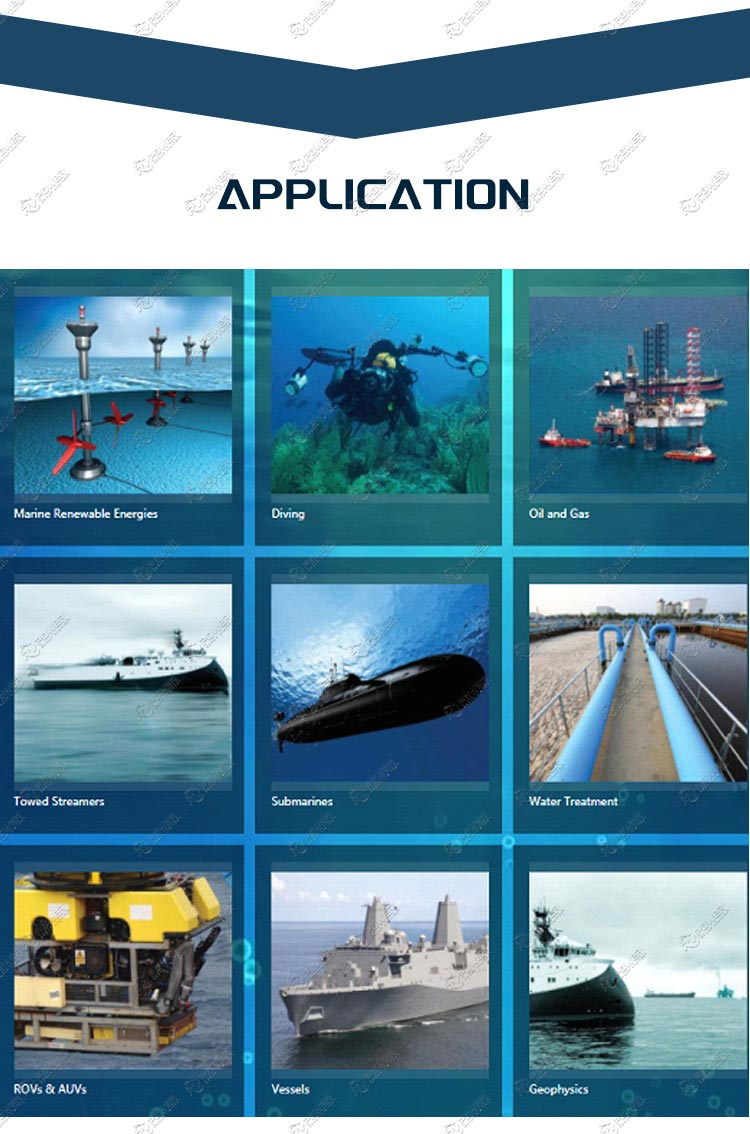
In work-class ROV operations, the tether cable is frequently damaged or requires length adjustment for specific missions. The HF75CXIL6M provides the male plug for these mid-span splices, allowing the video coax to be broken and rejoined in minutes on deck without the need for a full re-termination of the umbilical. The high frequency rating ensures that even with multiple in-line connectors in the signal path, the 4K/UHD video feed remains within jitter and noise margins.
Complex subsea sensor platforms — such as towed-array sonars or seismic monitoring grids — use internal harnesses to route RF signals between instrument pods. The HF50CXIL6M serves as the plug end for these internal harness segments, providing a reliable, space-efficient 50Ω connection that can be easily managed during system assembly and maintenance.
For shallow-water drop cameras and inspection systems, the cable often transitions from a deck-side spool to the submerged camera. The HF75CXIL6M provides the male plug at the water-surface interface, allowing the camera cable to be disconnected from the surface control unit for storage and transport, while maintaining a 3,000m-rated pressure seal during operation.
The reliability of the HF Coax series is rooted in our choice of Vulcanized Chloroprene (Neoprene) as the primary body material. While some manufacturers use thermoplastic overmolds (like Polyurethane), vulcanized neoprene offers critical subsea advantages:
To ensure the full 3,000-meter depth rating and signal performance, follow these industry-standard mating protocols:
We understand that offshore operations do not wait for 16-week lead times. By maintaining in-house control over the entire manufacturing process — from CNC contact machining to hydraulic vulcanization — we provide a standard lead time of 1 to 2 weeks for catalog items. For emergency repairs, we offer an expedited production service with 72-hour turnaround for select configurations. Stop managing backorders and start managing your mission.
A: Yes. We can provide a custom version terminated to standard RG-59 or RG-6 cable for applications requiring lower signal attenuation over longer cable runs. Contact our engineering team with your cable specification for a custom quotation.
A: The locking sleeve is supplied as a separate item to allow customers to choose between standard POM (polymer) sleeves for corrosion resistance and lightweight deployment, or 316L stainless steel sleeves for high-torque applications or environments with aggressive biofouling. When ordering, please specify whether you require a locking sleeve included with each connector assembly. We recommend ordering one spare locking sleeve per connector for field inventory.
A: The HF Coax series is classified as a Dry-Mate connector. It must be mated in air (on deck or in a dry environment) before submerging. It is not designed to be mated or de-mated underwater — the mating sequence requires precise alignment and the application of dielectric grease that cannot be effectively performed by a diver at depth. For applications requiring underwater mating capability, please contact our engineering team to discuss alternative connector configurations.
A: Yes. We offer the neoprene overmold in custom colors including black (standard), yellow, red, blue, and green. We recommend specifying yellow for 75Ω video connectors and black for 50Ω telemetry connectors — a color convention increasingly used across the industry for exactly this reason. Custom color coding is available with no additional lead time for standard configurations and with a 1-week additional lead time for custom cable types.
A: Yes. For projects requiring traceable quality documentation, we provide individual connector test records including: continuity test result, insulation resistance measurement (with test voltage applied), impedance spot-check data, and visual inspection sign-off. This documentation package is available for an additional charge and is typically specified by defense and academic research customers with rigorous quality assurance requirements.
The HF50CXIL6M and HF75CXIL6M are the in-line coaxial connectors that your subsea engineering team has been waiting for: precision RF performance, proven hydrostatic sealing, full cross-compatibility with the legacy connector standard, and a supply chain that responds at the speed of offshore operations. Whether you are outfitting a new ROV fleet, expanding an oceanographic monitoring network, or responding to an emergency repair situation, we have the inventory, the manufacturing capability, and the engineering expertise to support your project immediately.
Our team handles urgent offshore procurement situations with the same professionalism as long-cycle program orders. Tell us your required ship date, cable specification, and quantity — and we will tell you exactly how we can meet it.